 Business






Round Conversation Sofa Set Covers: Map Modules, Inner Openings, and the Full Circle

A round conversation set is usually made from several curved [...]
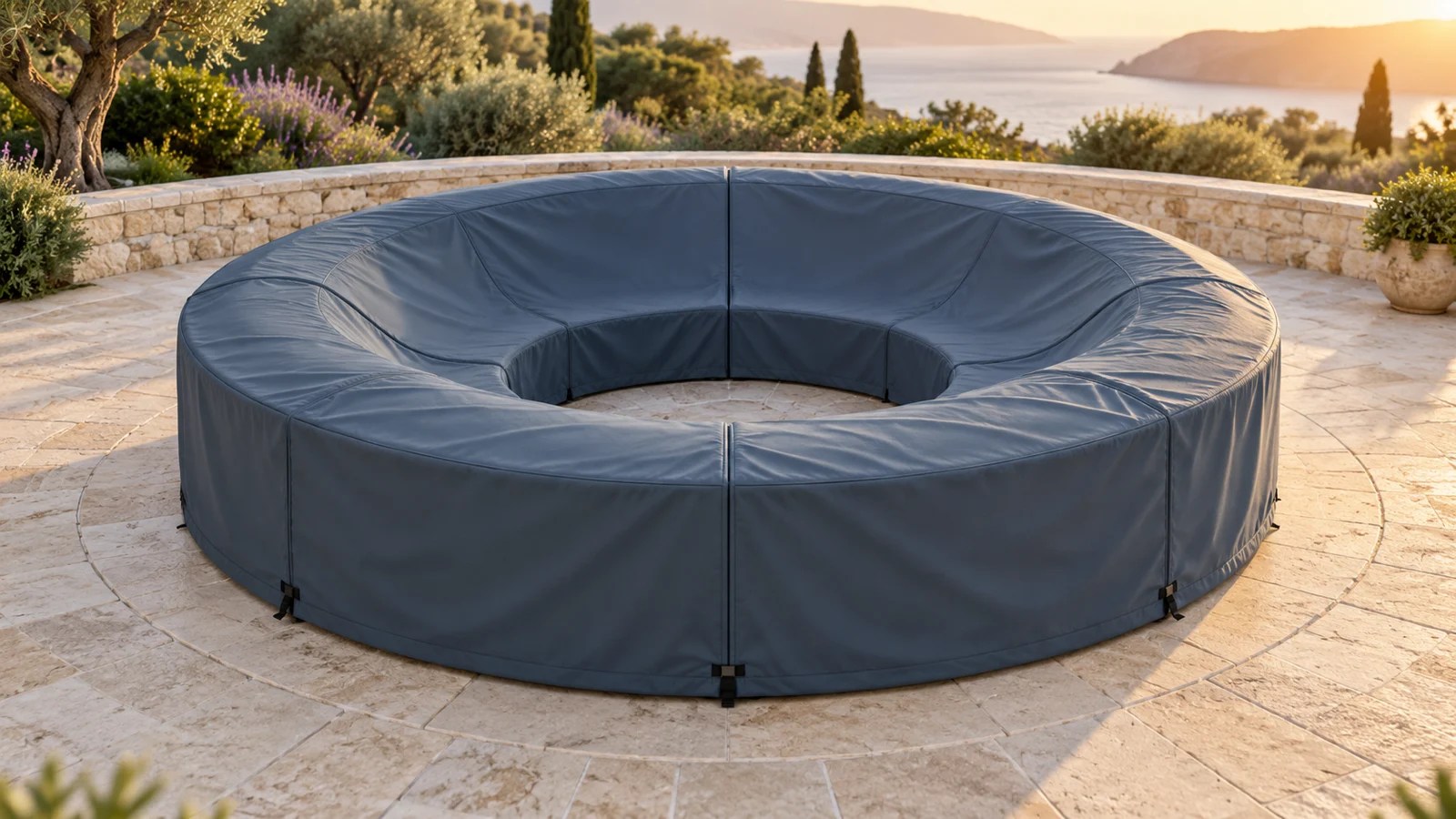
A round conversation set is usually made from several curved modules arranged around a center opening, table, or fire feature. Small changes in gap and rotation can shift the total diameter and leave the group out of round. A custom round conversation sofa set cover should start with one repeatable parking plan, then document both the outer circle and the inner opening rather than treating the set as a single solid cylinder.
Decide whether the group will use one shared cover or separate module covers. For a shared cover, mark every module position on the patio and remove any central fire appliance unless the approved design specifically includes it. Dry all cushions and frames, close movable sections, and photograph the arrangement from above before measuring. The furniture must return to that same layout each time.
Establish the Center and Module Order
Label each curved section clockwise and mark a common center point for the full arrangement. Record whether modules touch, use connectors, or maintain planned gaps. Numbering prevents a slightly different-radius piece from being rotated into the wrong position and changing the circle after the cover is made.
Measure the Outer Circle in Two Directions
Follow How to Measure to record the maximum outside diameter across at least two perpendicular axes. Add circumference as a check and measure several chords between labeled module joints. If the values disagree, the set may be oval, open, or unevenly spaced; document the actual plan rather than averaging it.
Map the Inner Opening
Measure the clear inner diameter, opening circumference, and distance from the common center to each front seat edge. Record any entry gap in the ring. The inner boundary matters because excess fabric can sag into the center, while an opening that is too tight may pull the cover across cushions and back seams.
Record Every Module and Gap
For each section, measure outer arc length, inner arc length, radial depth, back width, seat width, and the gap to its neighbors. Note connectors and feet. A module schedule lets the pattern follow real seam stations instead of forcing equal pie slices onto furniture that may include a wider entry or table section.
Capture Back Heights and Cushion Crowns
Measure back height at each module center and joint. Record top thickness, cushion crown, arm terminals, and any raised end panels. Keep cushions in one dry repeatable order if they remain outside. Differing heights may require stepped seams or orientation labels even when the plan looks perfectly circular.
Decide How the Center Will Drain
A shared cover needs a deliberate solution for the inner opening. State whether the opening remains open, uses a supported bridge, or follows a manufacturer-approved center insert. Do not span a fire feature or sharp table. Direct runoff away from cushions, connectors, and any central appliance location.
Plan Handling and Distributed Restraints
A circular group cover can be large and heavy, especially when wet. Compare manageable fabric choices through Our Fabrics and decide how many people will install it. Place orientation handles and balanced restraints at several stable lower module frames. Do not depend on one light section to anchor the entire ring.
Send a Circular Set Production Map
Provide the labeled plan, two outer diameters, circumference and chords, inner opening, module dimensions, gaps, entry break, heights, cushion plan, center drainage approach, feet, hem clearance, handles, and anchor points. Review the Round Conversation Sofa Set Cover, explore Patio Furniture Covers, or request a quote to compare one cover with modules.
Frequently Asked Questions
Can I measure only the outside diameter?
No. Include the inner opening, module arcs, gaps, heights, and entry break so the ring and its center are both defined.
Should a fire pit stay inside the covered circle?
Only if the approved cover design and appliance instructions explicitly allow it. Never cover a hot or connected fire appliance.
How do I keep the set in the same shape?
Mark module positions, label the order, and use the furniture’s approved connectors before measuring and covering.
Turn the Measurements Into a Production-Ready Cover
A round conversation set is a coordinated layout of curved modules, not one round object. Outer checks, the inner opening, module-by-module arcs, repeatable gaps, changing heights, and distributed anchors give CoversForge a production map that respects the set’s real geometry and everyday handling.
Share This Article


