 Business





High-Top Square Table Covers: Measure the Top, Pedestal, Base, and Tall Proportions

A modern high-top table combines a relatively wide square top [...]
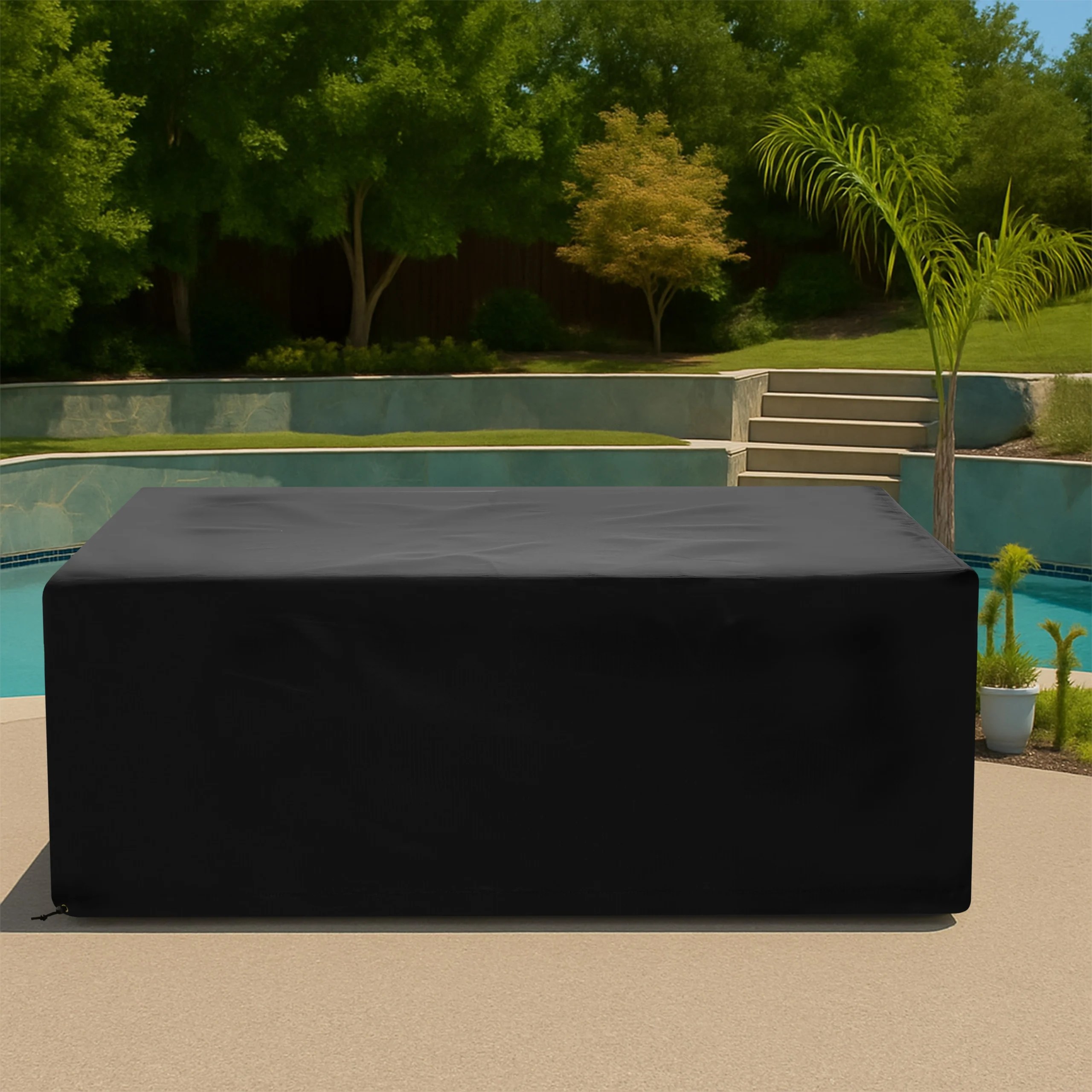
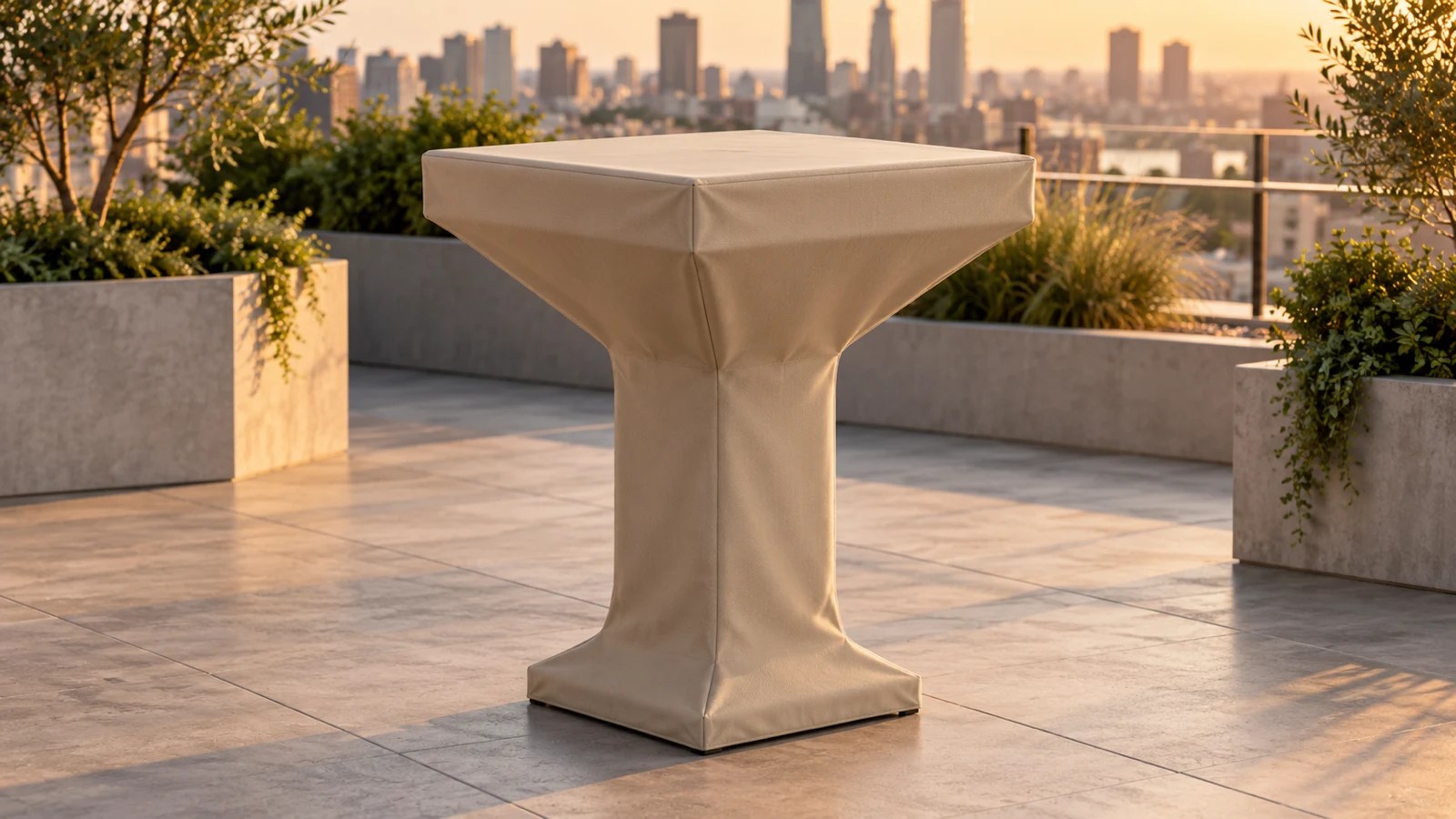
A modern high-top table combines a relatively wide square top with a narrow support and a tall center of gravity. The cover must pass over four corners, bridge the apron, and then transition toward a pedestal, legs, or compact base without turning into a loose vertical tube. A custom modern high-top square table cover needs measurements at several heights plus a plan for wind restraint that does not destabilize the table.
Remove stools and tabletop accessories, clean and dry every surface, and place the table on level ground in its normal storage spot. Confirm that adjustable glides are set and the base is stable. Photograph the top, underside, pedestal, and floor footprint. If the table is lightweight or intended for sheltered use, follow the furniture maker before leaving it covered in exposed winds.
Confirm the Square Top
Measure all four top edges and both diagonals. Equal nominal sides do not guarantee a square after assembly. Record top thickness, corner radius, bevels, and any lip or raised rim. Label one edge as the front so pedestal hardware, footrests, or asymmetric bases remain correctly oriented.
Measure the Apron and Underside
Using How to Measure, record apron depth, under-top brackets, support plates, and the clearance from top edge to the narrowest transition. Measure width and depth just below the top on both axes. The apron may control the first seam line even when the tabletop is the widest station.
Profile the Pedestal or Leg Arrangement
Measure the support width and depth immediately below the apron, at mid-height, near any footrest, and above the base. For four legs, map each leg and stretcher; for one pedestal, record taper, column shape, and decorative collars. Do not assume the support is centered beneath the top.
Map Footrests and Projections
Record footrest height, shape, projection, and orientation, plus hooks, bag rails, controls, charging ports, or cross braces. A circular foot ring beneath a square top creates a separate maximum diameter. Photograph hard contact points so reinforcement can be targeted without making the whole lower cover unnecessarily stiff.
Record the Base Footprint
Measure the base in both directions and along diagonals, including glides, feet, bolt plates, and floor protectors. Compare it with the top footprint. A flared base may be wider than the pedestal, while a compact base leaves the covered table more sensitive to wind and requires conservative anchoring decisions.
Plan the Top-to-Base Transition
A tailored pattern can step inward below the apron, but it still needs enough ease to lift over the top corners. Decide whether subtle vertical seams, a shaped lower panel, or a zipper provides the installation path. Avoid an aggressive waist that snags the corner or pulls the table sideways during removal.
Manage Drainage, Hem, and Wind
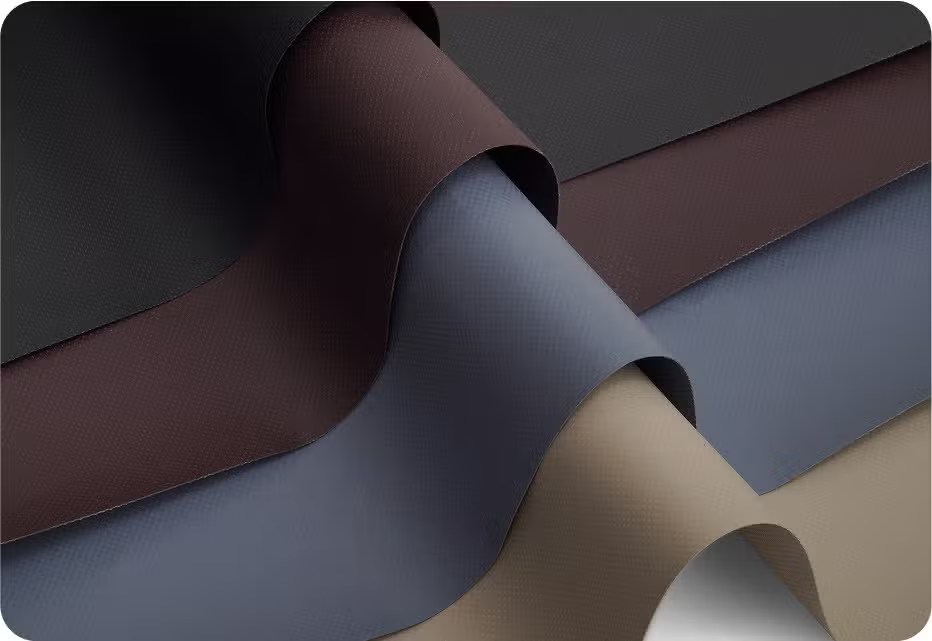
Compare fabric options through Our Fabrics. Preserve a slight top crown or approved smooth support so water does not pond on the square surface. Keep the hem above paving. Position opposing lower restraints around stable base zones, never around adjustable glides or a footrest that could lever the table.
Send a Height-Station Production Brief
Provide four top edges, diagonals, corner radii, apron profile, support cross-sections, footrest map, base dimensions, total height, hem clearance, installation direction, drainage plan, and approved anchors. Review the Modern High-Top Square Table Cover, browse Patio Furniture Covers, or request a quote for an offset pedestal.
Frequently Asked Questions
Is the tabletop size and table height enough?
No. Add the apron, pedestal or leg stations, footrest, base footprint, corner radii, and installation route.
Should stools stay under the same cover?
This article addresses the table alone. A table-and-stool cover needs the parked stool layout measured as one larger footprint.
How should a tall table cover be secured?
Use balanced restraints only at stable lower structure and follow the furniture maker for exposed-weather storage. The cover cannot correct an unstable base.
Turn the Measurements Into a Production-Ready Cover
The square top and narrow tall support create two very different pattern zones. Measuring the apron, height stations, footrest, base, top drainage, and balanced anchors helps CoversForge shape the cover cleanly while preserving a safe installation path around the table’s higher center of gravity.
Share This Article


