 Business





Half-Moon Log Holder Covers: Measure Arcs, Open Faces, Feet, and Airflow

A half-moon log holder uses a broad curved arch to [...]
A half-moon log holder uses a broad curved arch to cradle firewood above the ground. Its open faces, narrow rails, changing radius, and uneven log load create a profile that a rectangular cover cannot describe well. A custom half-moon log holder cover should protect the rack while supporting drainage and safe airflow.
Remove loose bark and wet debris, inspect the frame, and decide whether the holder will be covered empty or with a defined quantity of seasoned wood. Measure in its normal outdoor location after the rack and logs are dry. Keep the holder safely away from active flames and hot embers.

Define the Half-Moon Orientation
Identify the flat base line, highest point of the arch, open front and back, and any side rails. Photograph the rack square-on from both open faces. If the curve is not symmetrical, mark the left and right ends rather than assuming one radius.
Measure Span, Depth, and Arch Height
Use How to Measure to record the outside span between the lowest ends, maximum front-to-back depth, and vertical height from the floor to the arch crown. Keep the tape straight across the opening; measuring along the curved rail does not define the cover envelope.
Trace the Curve at Several Heights
Record widths at the base, one-quarter height, midpoint, and near the crown. A few cross-sections show whether the holder is semicircular, elliptical, or flattened on top. Note decorative scrolls or handles that extend beyond the main arc.
Include Base Rails, Feet, and Tool Hooks
Measure the outside footprint of feet, skids, crossbars, and any attached kindling shelf or tool hook. Guard sharp welds and cut ends before covering. Set the hem above soil, ash, and standing water while keeping lower rails protected.
Choose an Empty or Loaded Profile
An empty rack produces the most repeatable fit and promotes drying. If wood remains, define a maximum stacked height and keep every piece within the frame. Never measure one random pile and expect the cover to fit safely over future loads that project outside the arch.
Preserve Airflow Around Seasoned Wood
Use dry seasoned wood and allow circulation around the load. A cover should shed rain without sealing damp logs into a closed pocket. Do not cover green or saturated firewood tightly, and remove the cover periodically according to local storage conditions.
Keep the Cover Away From Heat
Move the holder outside the manufacturer-required clearance from fireplaces, chimineas, grills, and heaters. Let ashes and nearby surfaces cool completely. The cover is for cold storage only and must be removed before any fire is lit or fuel is handled.
Select Fabric for Curves and Abrasion Zones
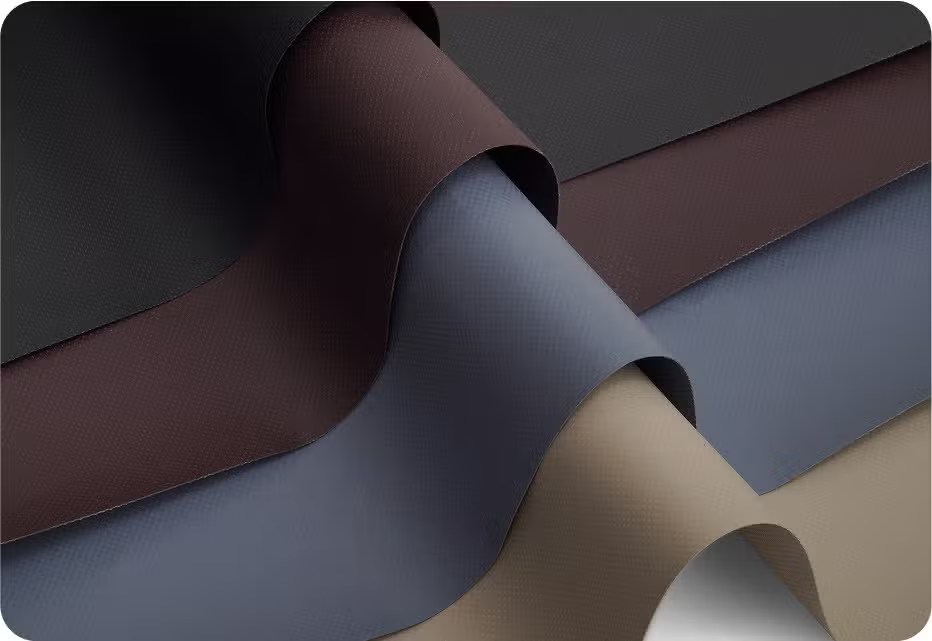
Compare materials through Our Fabrics. Reinforce the arch crown, rail ends, and stable tool-hook contacts after sharp edges are corrected. A flexible panel follows the half-moon curve more cleanly, while a smooth lining can reduce rubbing against painted metal.
Anchor at the Stable Lower Frame
Use opposing straps around base rails or feet that cannot shift. Avoid looping around loose logs or removable fireplace tools. Tighten evenly so the cover remains centered over the crown and does not pull against one curved end.
Prepare a Curved-Rack Production Brief
Send span, depth, arch height, cross-section widths, base footprint, projection map, empty-or-loaded decision, hem clearance, ventilation plan, and anchor points. Visit the Half-Moon Log Holder Cover, explore Grill & Heating Covers, or request a quote for an asymmetric rack.
Frequently Asked Questions
Should the log holder be empty when measured?
An empty rack gives the most repeatable shape; otherwise define and maintain a fixed maximum load.
Can I cover wet firewood?
Let the wood dry and preserve airflow rather than sealing moisture beneath the cover.
May the cover stay on near a burning fire?
No. Remove it and maintain all required heat and ember clearances.
Turn the Measurements Into a Production-Ready Cover
The key dimensions are the straight span, vertical crown, depth, and several widths through the curve. When the load condition, base footprint, ventilation, and heat clearances are also documented, CoversForge can shape a cover around the half-moon frame without trapping unsafe moisture or relying on a loose box.
Share This Article

Written by : CoversForge
Follow Us
Latest Articles

September 29, 2026

September 29, 2026
