 Business





House-Style Firewood Holder Covers: Measure Roof Peaks, Log Bays, Posts, and Airflow

A house-style firewood holder has a roof ridge, sloped panels, [...]
A house-style firewood holder has a roof ridge, sloped panels, eaves, upright posts, an open log bay, and a raised base. That geometry behaves differently from a flat rack. A custom house-style firewood holder cover should follow the roof without pooling while preserving the ventilation and access needed for properly seasoned wood.
Measure the empty structure on level ground. Remove loose bark, check fasteners, and identify sharp metal or timber edges. Store only dry, seasoned wood and follow local fire-safety guidance for distance from buildings, ignition sources, heaters, grills, and chimneys.

Start With the Empty Structural Envelope
Record overall width, depth, and height across the permanent frame, not the current wood pile. Include footplates, cross braces, door hardware, and projecting fasteners. Photograph the front, rear, both sides, and roof so the sewing team can distinguish rigid structure from changing contents.
Measure the Ridge and Roof Slopes
Use How to Measure to record ridge length, peak height, eave height, roof width, and both slope lengths. Measure front and rear overhangs separately. If the ridge is off-center or the two pitches differ, label the long and short roof panels clearly.
Map Eaves, Fascias, and Drip Edges
Measure how far each eave projects beyond the posts and note gutters, caps, hooks, or decorative trim. A cover that is sized only to the post footprint can hang on the eaves. Add smooth reinforcement at hard drip edges without closing the bottom so tightly that air circulation disappears.
Define the Log Bay and Load Limit
Mark the maximum safe fill line inside the holder. Wood should not push against the cover or rise into the roof panel. Record the front opening, internal braces, shelf positions, and any divider. Treat the structural envelope as fixed and the log stack as a controlled interior load.
Plan a Practical Access Panel
Decide whether the cover is removed completely or opened at the front for occasional wood retrieval. A zipper or flap needs a clear path that avoids jagged bark and hinge points. Keep closures away from hot equipment and never use the covered holder as an enclosure for warm ashes.
Preserve Drying Airflow
A water-shedding fabric does not replace ventilation. Keep a deliberate lower gap above the paving, use vents where appropriate, and avoid wrapping damp wood in an airtight pocket. Position the holder so runoff and wind-blown rain do not collect beneath the base.
Choose Fabric and Reinforcement Zones
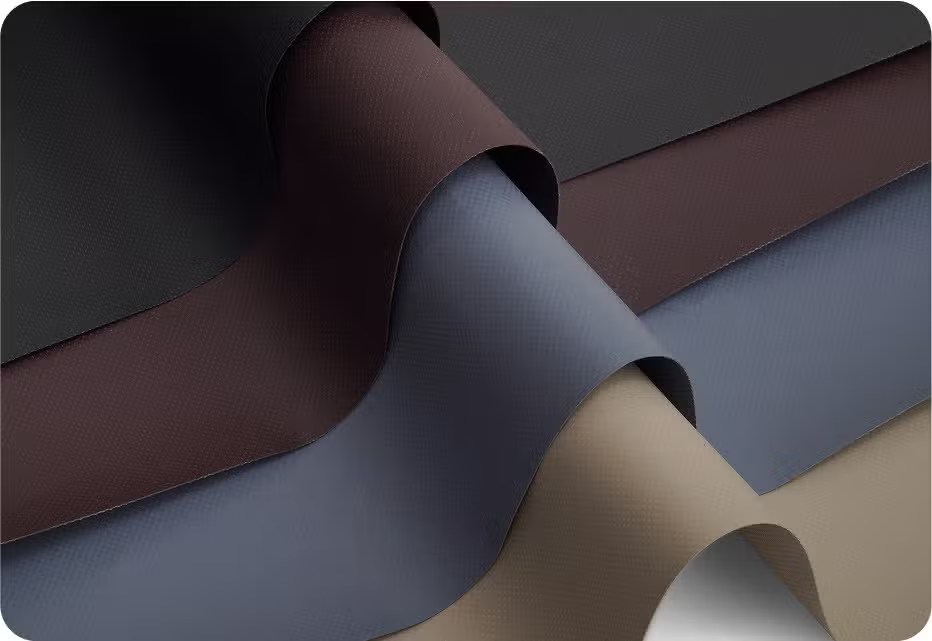
Compare outdoor fabrics for UV resistance, cold flexibility, abrasion, and finished weight on Our Fabrics. Browse Equipment Covers for durable storage applications. Reinforce the ridge, eaves, post corners, and closure ends where repeated contact is expected.
Anchor to the Frame, Not the Logs
Place straps, buckles, or grommets at stable lower posts or manufacturer-approved frame points. Do not route a tie through the wood pile or around a loose log. Keep hardware clear of walkways, snow-removal paths, and areas where water can freeze around the feet.
Use a Safe Removal Sequence
Release lower anchors, open the access side if present, lift the cover above the eaves, and fold it away from bark and damp ground. A second person helps with tall holders. Dry the cover before storage and inspect the ridge reinforcement for abrasion after severe weather.
Complete the Holder Specification
Provide the empty-frame dimensions, ridge and slope geometry, eaves, posts, braces, safe fill line, access direction, ventilation gap, hem height, anchors, exposure, and labeled photographs. Review the House-Style Firewood Holder Cover page before final approval.
Frequently Asked Questions
Should the holder be measured full of firewood?
No. Measure the permanent frame and state a safe maximum fill line. A changing pile should never define the cover pattern.
Can freshly split wood stay covered?
Seasoning requirements vary, but wet wood needs substantial airflow. Do not create a sealed enclosure that traps moisture.
Can the cover go near a fire pit?
Maintain every clearance required by local rules and the equipment manufacturers. Keep the covered holder away from flame, sparks, hot ash, and hot surfaces.
Turn the Measurements Into a Production-Ready Brief
The peaked roof is only one part of the specification. Eaves, posts, access, a controlled fill line, ventilation, ground clearance, and frame-based anchors define a house-style firewood holder cover that remains practical through changing seasons. Request a Quote when the measurements and photographs are ready.
Share This Article

Written by : CoversForge
Follow Us
Latest Articles

September 25, 2026

September 25, 2026
