 Business





Rectangular Trampoline Covers: Measure Frame Sides, Corners, Legs, and Drainage

Rectangular and square trampolines concentrate load at straight rails and [...]
Rectangular and square trampolines concentrate load at straight rails and corner transitions, so they need a different survey from a round frame. A custom rectangular square trampoline cover should match the actual outside frame, pad profile, leg layout, and approved drainage method.
Measure only when the trampoline is dry, empty, and unavailable for play. Follow the trampoline maker’s maintenance, anchoring, snow-load, and storage instructions. A weather cover never replaces a safety enclosure, structural inspection, ground anchors, or adult supervision.
Confirm the Model and Storage Configuration
Record the manufacturer, model, nominal size, and whether the net, poles, ladder, basketball hoop, and accessories are removed. Photograph the exact off-season setup. Do not improvise by folding or disconnecting structural parts unless the maker specifically permits that configuration.
Measure the Outside Frame, Not the Jumping Mat
Use How to Measure to record both long sides, both short sides, and both frame diagonals at the outside rails. The woven mat is smaller and can stretch, so it is not a reliable finished-cover boundary.
Describe Every Corner
Identify square, radiused, chamfered, or molded corners. Measure straight-run endpoints, corner radius or bevel length, pad overhang, and any projecting spring cover. A paper or cardboard corner template can clarify geometry when the radius is difficult to describe with one number.
Record the Pad and Spring-Zone Profile
Measure pad width, thickness, seam locations, skirt depth, and height above the frame. Note buckles, straps, gaps, and raised hinge areas. Dry and secure the pad exactly as it will remain; loose padding changes the perimeter and can trap water.
Map Legs, Braces, and Anchors
Number each leg station and measure spacing from a chosen corner. Record U-legs, straight legs, braces, anchor straps, sockets, and ground clearance. Keep lower closures away from sharp spring ends and preserve access to the engineered anchoring system.
Design Drainage Without Creating a Basin
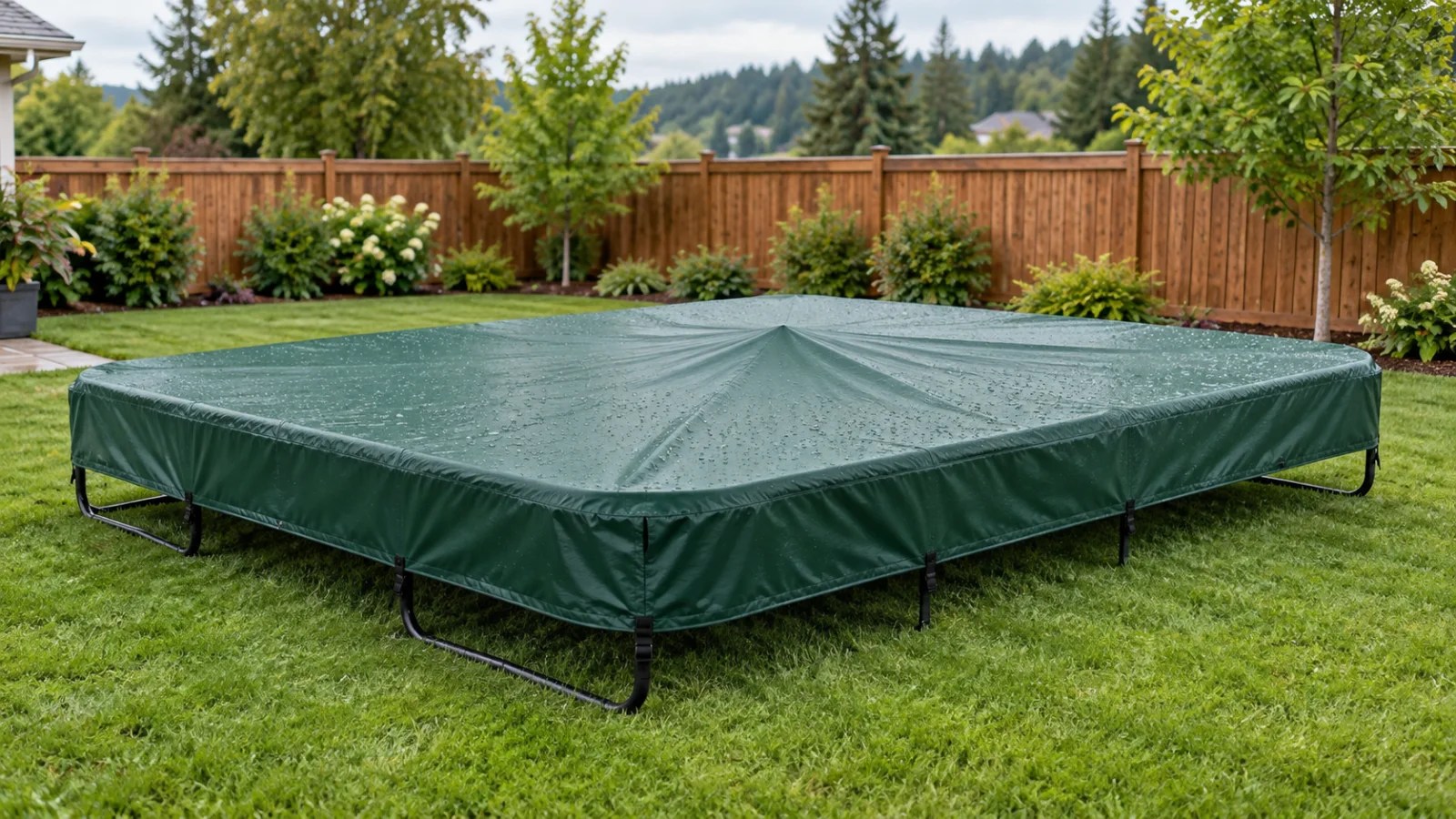
A flat unsupported sheet can collect substantial water. Follow the trampoline maker’s guidance for cover support and drainage, then record the approved high point and runoff direction. Do not add an unstable object beneath the cover or rely on fabric tension to carry standing water.
Account for Wind and Site Exposure
Photograph nearby fences, walls, trees, slopes, and prevailing wind direction. The trampoline must remain anchored independently of the cover. Specify secure lower points around the perimeter without routing straps where people walk or lawn equipment passes.
Choose Fabric for a Wide Horizontal Span
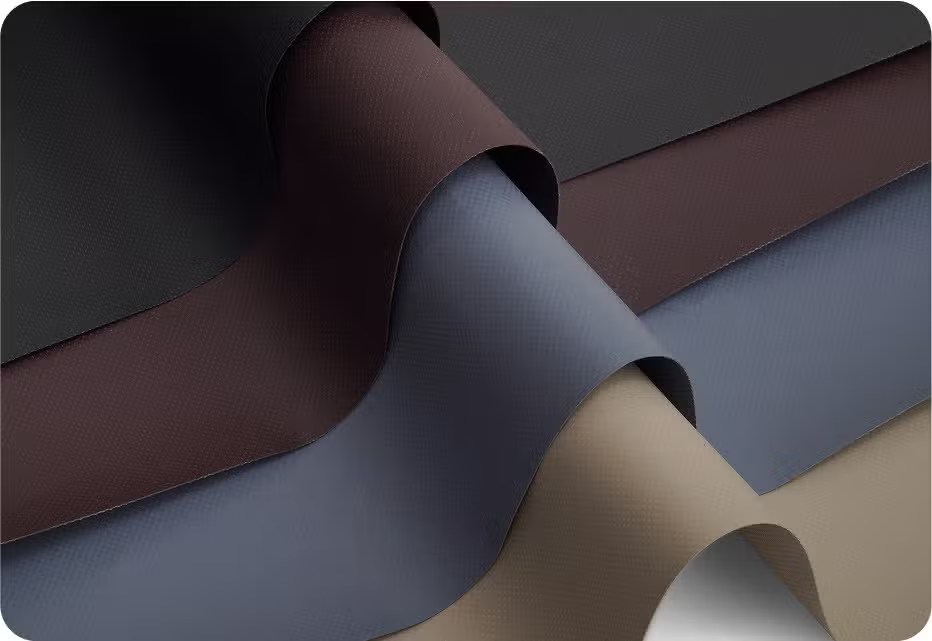
Compare water behavior, UV resistance, tear strength, abrasion, flexibility, and finished weight on Our Fabrics. Browse Play Equipment Covers and Custom Covers. Wide covers benefit from planned seams and manageable handling weight.
Set a Safe Installation and Removal Routine
Use at least two adults for a large cover. Align labeled corners, spread the fabric without stepping on the mat, and secure opposite sides gradually. Remove all closures and the entire cover before use; never allow children to crawl, sit, or jump on a covered trampoline.
Prepare the Rectangular-Trampoline Brief
Send model details, outside rail dimensions, diagonals, corner geometry, pad profile, leg stations, anchors, accessories, approved drainage support, exposure, and photos. Review the Rectangular / Square Trampoline Cover page.
Frequently Asked Questions
Can I order from the advertised trampoline size?
Use the model as a reference, but provide actual outside-frame, corner, pad, and accessory measurements.
Should the cover rest flat on the mat?
Follow the trampoline manufacturer’s storage guidance and provide an approved drainage plan that prevents pooling.
Does a cover replace anchors or a safety net?
No. Maintain the structural anchoring and all safety equipment required by the trampoline maker.
Turn the Measurements Into a Production-Ready Brief
A rectangular trampoline survey is strongest when four rail lengths, two diagonals, corner details, pads, legs, and drainage all agree. That verified frame map gives CoversForge the practical information needed to assess fit while keeping structural safety, anchoring, and off-season handling in their proper roles. Request a Quote when the measurements and photographs are ready.
Share This Article

Written by : CoversForge
Follow Us
Latest Articles

September 23, 2026

September 23, 2026
