 Business






Outdoor Trash Can Covers: Fit Lids, Handles, Wheels, and Clearance

Measure a custom rectangular outdoor trash can cover around closed lids, handles, hinges, wheels, pickup clearances, drainage, ventilation, and secure hems.
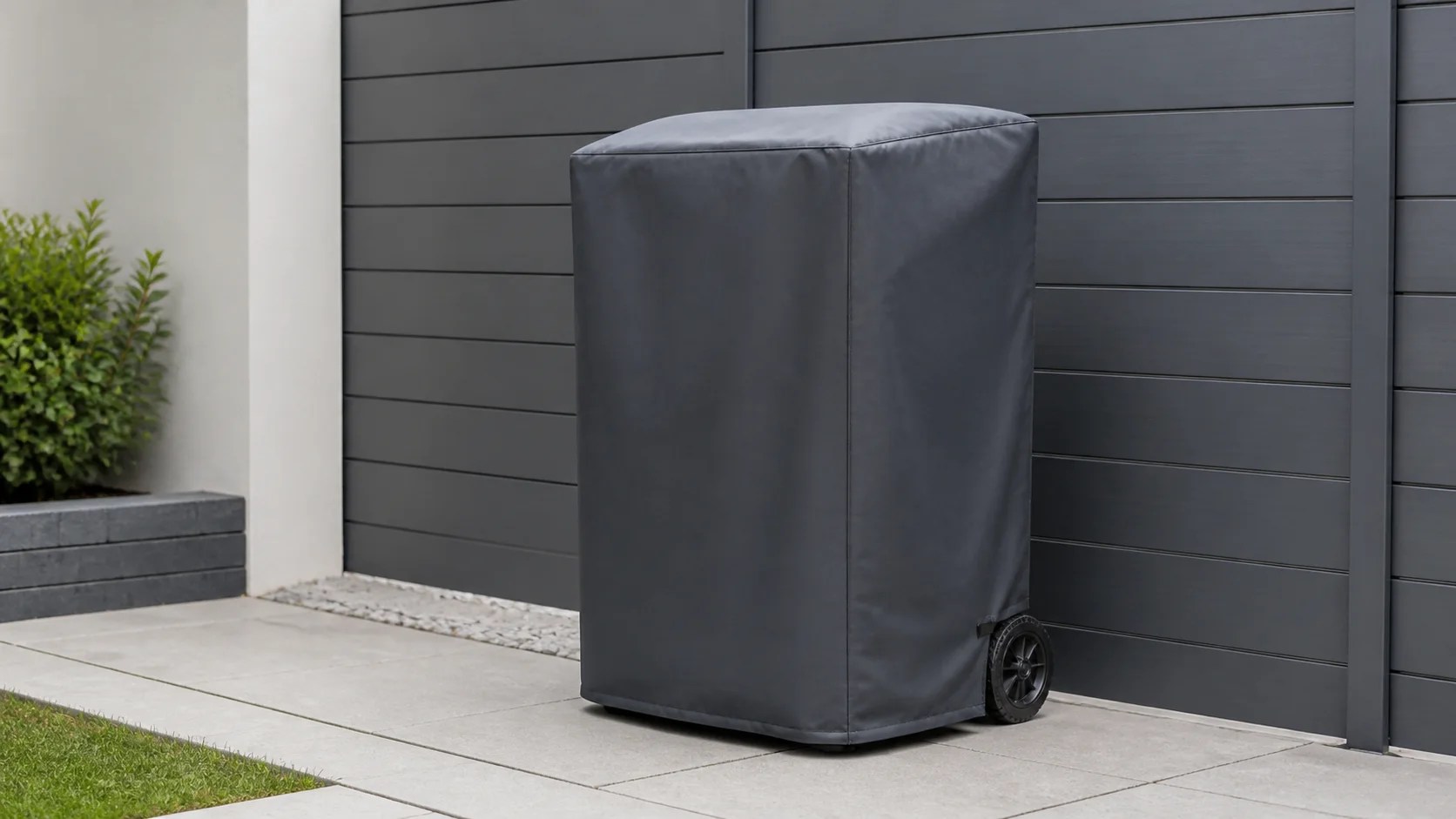
Municipal carts and rectangular outdoor bins often sit in exposed service areas where sun, rain, dust, and wind affect the exterior. A custom rectangular outdoor trash can cover can improve off-day storage and keep a cleaned cart visually contained, but it must be designed around the closed lid, handle, hinge, wheels, and the way the bin is moved.
Empty, wash, and dry the container before fitting a cover. Follow local collection rules and remove the cover completely before adding waste, rolling the cart, or placing it at the pickup point. A textile cover should never conceal leakage, attract pests, block sanitation, or prevent workers from identifying and handling the approved container.
Identify the Exact Bin and Pickup Routine
Record the cart maker, capacity, body style, lid orientation, wheel count, and collection method. Confirm whether the bin is lifted by an automated arm, moved through a gate, or stored beside other carts. Design for the parked location only. Do not leave a cover on during collection or rely on it to secure refuse, control odors, or repair a cracked lid.
Measure the Closed Rectangular Body
Following How to Measure, record maximum width across the body or lift bar, depth from the front wall to the rear handle, and height from lid crown to the planned hem. Measure at the top, middle, and wheel zone because many carts taper. Note ribs, side handles, and axle caps that project beyond the main box.
Map the Lid, Hinge, and Handle
Measure only with the lid fully closed and latched as intended. Locate hinge barrels, grab handles, foot pedals, locks, and any raised recycling or waste marking. A shaped top should settle without forcing the lid open or pressing on a pedal. If the lid is warped, the hinge is broken, or the cart leaks, arrange repair or replacement before covering.
Keep Wheels and Ground Clearance Free
Record wheel diameter, axle width, and the rearward sweep of any tow handle. Keep the hem above paving so it cannot enter the wheels or soak up wash water. Closures should be reachable from a stable standing position and should not cross the cart’s rolling path. Remove the cover before tilting or moving the bin, even for a short distance.
Control Moisture, Residue, and Ventilation
A cover belongs on a clean, empty, dry container. Trapped food residue or wash water can promote odor, corrosion of metal hardware, and pest activity. Plan reasonable airflow around the lower edge and do not seal drain holes. After rain, check whether water collects on the lid profile or between closely parked carts, then revise the shape instead of over-tightening the hem.
Choose a Cleanable Outdoor Fabric
Review UV exposure, water performance, abrasion, flexibility, and cleaning guidance on Our Fabrics. Browse Custom Covers for made-to-measure options. Choose a finish appropriate for the service area, and avoid claims that fabric disinfects the cart, blocks all odor, or makes contaminated waste safe to handle.
Secure the Cover for Off-Day Storage
Place wind-control features around a stable lower body zone, clear of wheels, pedals, lift pockets, and municipal identification. Use conservative tension so the fabric does not deform the lid. Secure strap tails away from gates and walkways. If local rules require the cart to remain immediately accessible, use a removal plan that staff can perform without tools or reaching into traffic.
Coordinate Multiple Bins Without Confusion
For waste, recycling, and organics carts, use external labels or color identifiers that comply with local rules. Keep each cover matched to one recorded size; two bins with the same capacity may have different hinges and tapers. Store removed covers in a clean, dry location during pickup. Never cover a bin to disguise prohibited contents or make it appear empty.
Test the Fit Through a Full Service Cycle
Fit the cover after cleaning and drying, then inspect the top, corners, handle pocket, and wheel clearance. Remove it, roll the cart through the gate, simulate the normal staging route without the cover, and return the dry cart to storage before refitting. Confirm that staff can identify the front and back immediately and that closures do not collect grime. After the first storm, check for pooling and wind shift. Revise persistent contact points rather than cinching fabric against the hinge or wheels.
Send a Clear Bin Specification
Provide make, model, capacity, closed dimensions, taper measurements, lid and hinge profile, handle and pedal locations, wheel clearance, storage surface, exposure, pickup routine, and photos of every side. Review the Custom Rectangular Outdoor Trash Can Cover or use Request a Quote. Property and facility programs can standardize multiple carts through Business Inquiries.
Frequently Asked Questions
Can a trash cart stay covered on collection day?
No. Remove the cover completely before loading, rolling, staging, or collection, and follow the local authority’s identification and access rules.
Should the cover reach the ground?
No. Keep the hem above paving and clear of wheels, pedals, drains, and standing water so it does not wick moisture or enter the rolling path.
Will a fabric cover control odors?
A cover is not a sanitation or odor-control system. Empty, clean, dry, and maintain the bin according to local guidance, and never cover leaking or contaminated contents.
Share This Article


