 Business




Custom Welding Machine Covers: Plan Cable Ports, Control Access, and Ventilation

Welding machines are often stored near open shop doors, covered [...]
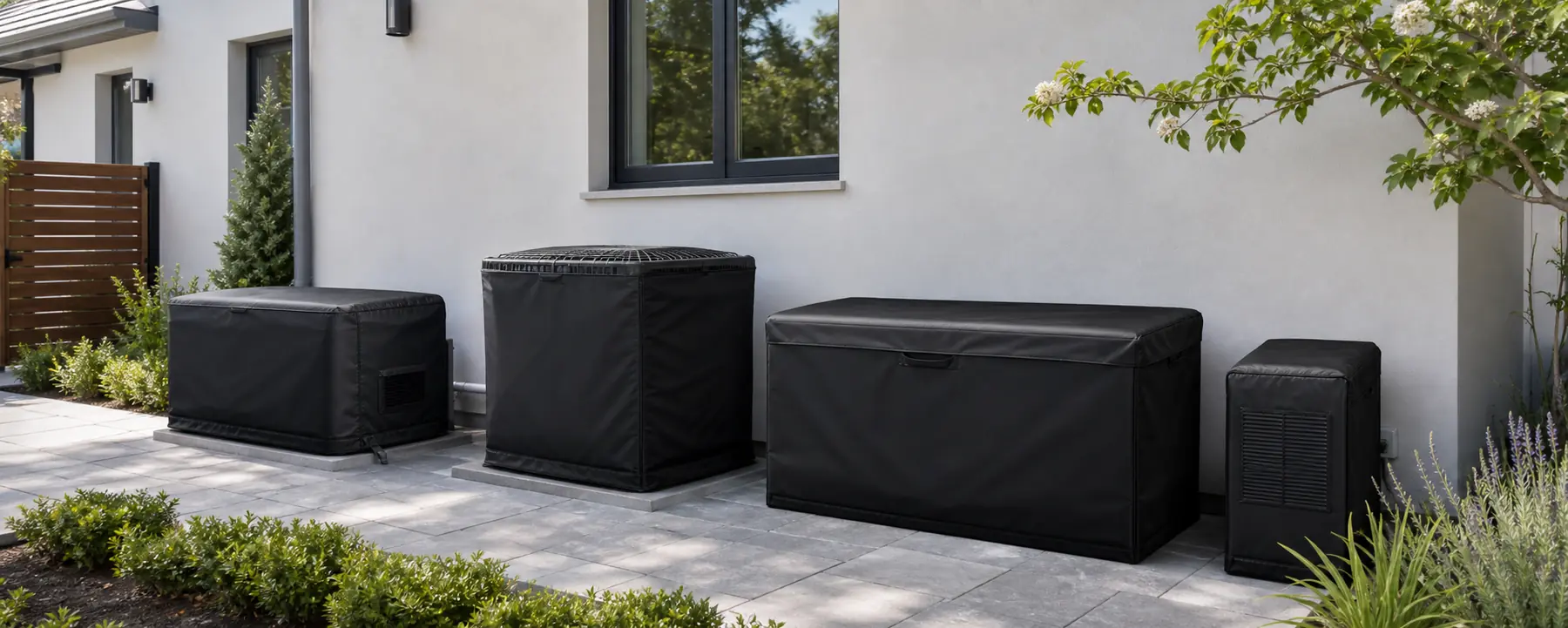
Welding machines are often stored near open shop doors, covered work bays, trailers, or service yards where dust and weather can reach controls and connectors. A custom welding machine cover can help protect an inactive unit, but the design must account for cables, control panels, cart handles, vents, and safe cool-down procedures.
Use a welding machine cover only for inactive storage
Shut down the welder according to the manufacturer’s instructions, disconnect it from power when required, close and secure gas supplies, and allow the entire unit to cool. Remove sparks, hot metal, grinding dust, and moisture from the storage area before installing the cover.
Do not weld, charge, test, or operate the machine while it is covered. Storage vents in a fabric cover are not a substitute for the clearances and airflow required during operation.
Define whether the cover protects the machine or the full cart
Some users cover only the welder body. Others need one enclosure for the machine, cart shelves, wire feeder, cable hooks, and cylinder-support frame. Choose the boundary before measuring. The custom welding machine cover should match the equipment’s normal parked configuration, not a temporary arrangement created for the measurement.
If gas cylinders remain on the cart, follow all applicable storage rules and do not assume a fabric cover is appropriate for enclosing them. When in doubt, limit the cover to the machine and cart components approved for covered storage.
Measure the maximum operating projections in storage position
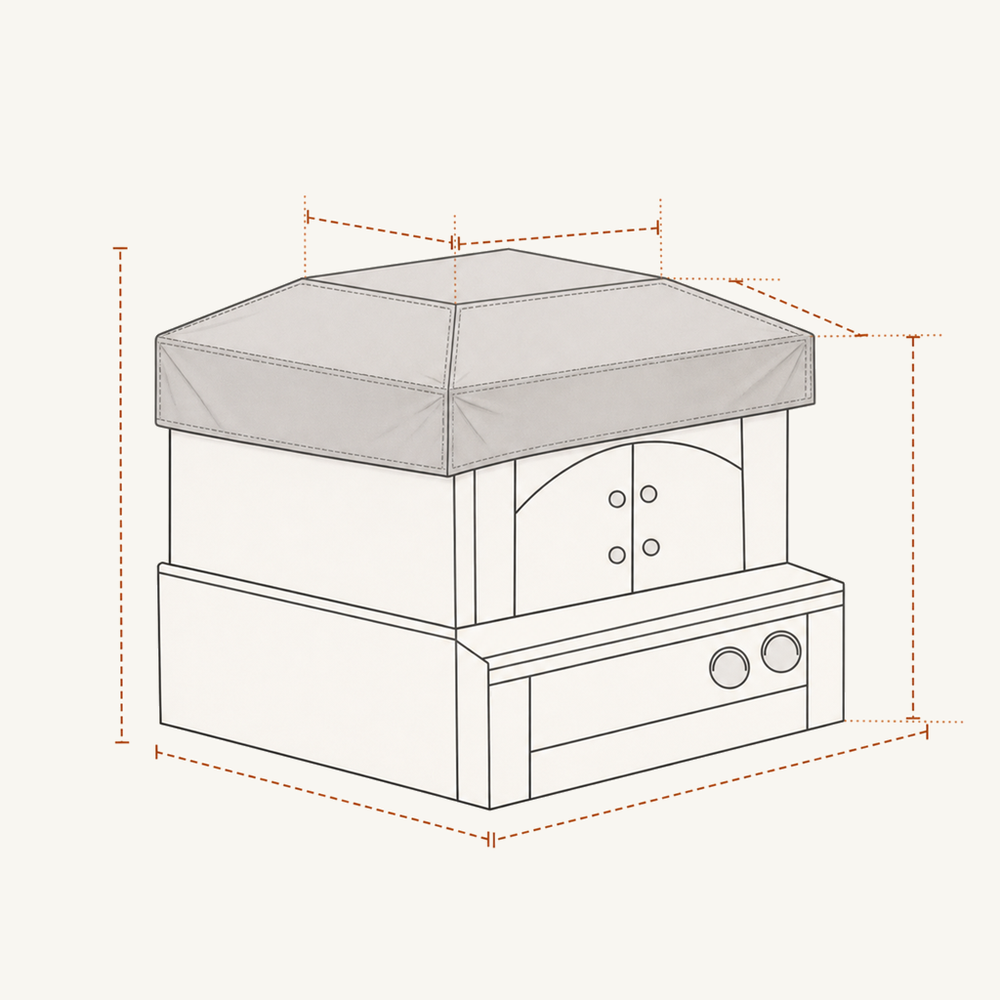
Park the cart on a level surface and coil the leads as they will be stored. Measure:
- Overall width: including wheels, cable hooks, side handles, and protruding connectors.
- Overall depth: from the front controls to the rear cart frame or handle.
- Overall height: from the floor to the highest approved covered component.
- Machine body: its separate width, depth, height, and position on the cart.
- Cart shelf and caster locations: useful for shaping the hem and tie-downs.
- Connector positions: their distance from the nearest edge and from the floor.
For irregular carts, use the CoversForge measuring guide and include annotated front, side, and rear photos.
Plan cable pass-throughs around the storage routine
A cable pass-through is useful when leads are stored outside the main cover, but every opening should close when unused. A downward-facing flap, zipper, or hook-and-loop closure helps limit direct dust and rain entry. Reinforcement around the opening reduces wear from repeated contact with heavy cable jackets.
Place pass-throughs where cables naturally exit without a sharp bend. Do not create openings directly above control panels or ventilation louvers.
Add control access only when it has a real purpose
A front zipper panel can make inspections easier without removing the full cover. It may also provide access to an asset label or maintenance checklist. However, the panel should not encourage operation while covered. Label the storage procedure internally and fully remove or secure the cover before the machine is powered.
For fleets or training centers, consistent panel placement helps technicians inspect multiple units the same way.
Manage moisture after the machine is dry and cool
Covered vents can support passive air exchange during storage. Position them beneath protective flaps and away from direct splash. The bottom edge should not seal tightly against a wet floor; a small, controlled clearance can help the interior dry.
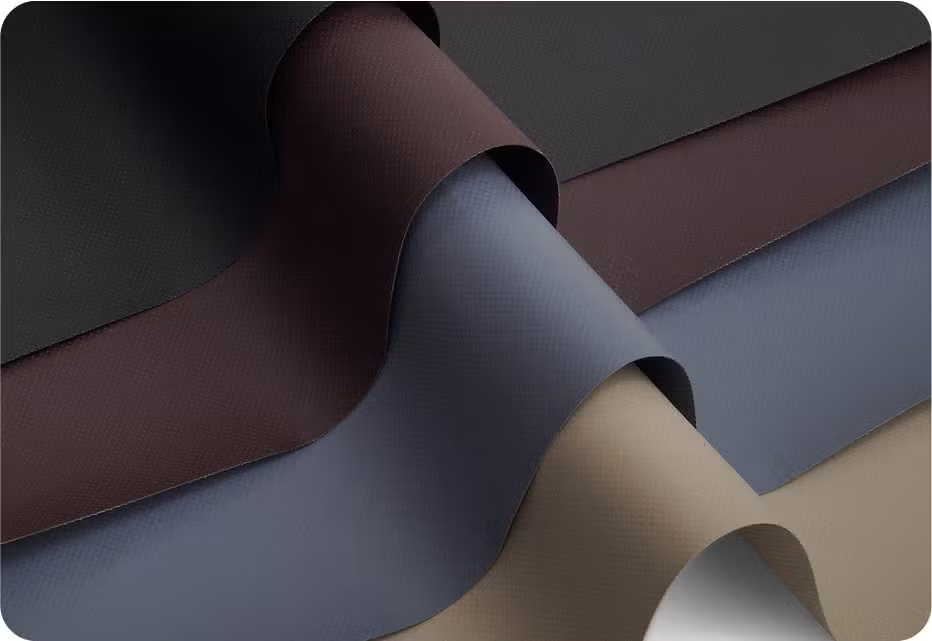
Choose fabric according to the storage environment. A shop-adjacent machine exposed mainly to dust may prioritize easy handling, while a unit near an open service yard may need stronger resistance to rain, UV, and abrasion. Review the options on the outdoor cover fabric guide.
Reinforce the places technicians touch
Cart corners, top handles, cable hooks, and front connectors can concentrate wear. Reinforced patches and shaped seams are more effective than adding excessive loose fabric everywhere. Exterior lifting handles should align with strong structural seams so the cover can be removed without pulling on a zipper.
Standardize covers for commercial welding equipment
For several welders, create a simple asset schedule containing model, cart style, overall dimensions, cable arrangement, preferred opening, and printed identifier. Group identical configurations before ordering. This supports repeat production and reduces the chance that similar-looking covers are placed on the wrong machines.
CoversForge supports business projects through its business inquiries and commercial cover program pages.
Checklist for a custom welding machine cover request
- Confirm the machine is suitable for covered, inactive storage.
- Define whether the machine body, cart, feeder, and accessories are included.
- Provide overall and component dimensions.
- Mark connectors, cable exits, vents, hooks, handles, and casters on photos.
- Specify access panels, closures, tie-downs, and identification needs.
- Describe dust, moisture, sun, and handling conditions.
For a unique cart or multiple configurations, attach the schedule and photos to a custom cover quote. Include one wide photo of the complete storage setup. The most useful cover is one that protects the stored machine without interfering with the shop’s safety procedure.
Share This Article
