 Business





Custom Outdoor Hostess Stand Covers: Measure Shelves, Casters, and Logos

An outdoor hostess stand is a working piece of restaurant [...]
An outdoor hostess stand is a working piece of restaurant equipment, not just a small podium. Its sloped writing surface, shelves, menus, casters, doors, electronics, and brand presentation all affect the cover design. A custom outdoor hostess stand cover should be fast for staff to install after service while fitting closely enough to stay orderly on a visible patio.
Map the restaurant’s closing workflow first
Document what remains on or inside the stand overnight. Remove paper menus, tablets, batteries, payment devices, and other items that should not be stored outdoors. Lock doors or drawers, park the stand in its assigned location, and engage caster brakes before measuring.
The cover should be installed only when the stand is out of service. A consistent closing routine reduces the chance that staff cover a warm device, loose paper, or protruding accessory.
Measure the stand in its complete parked configuration
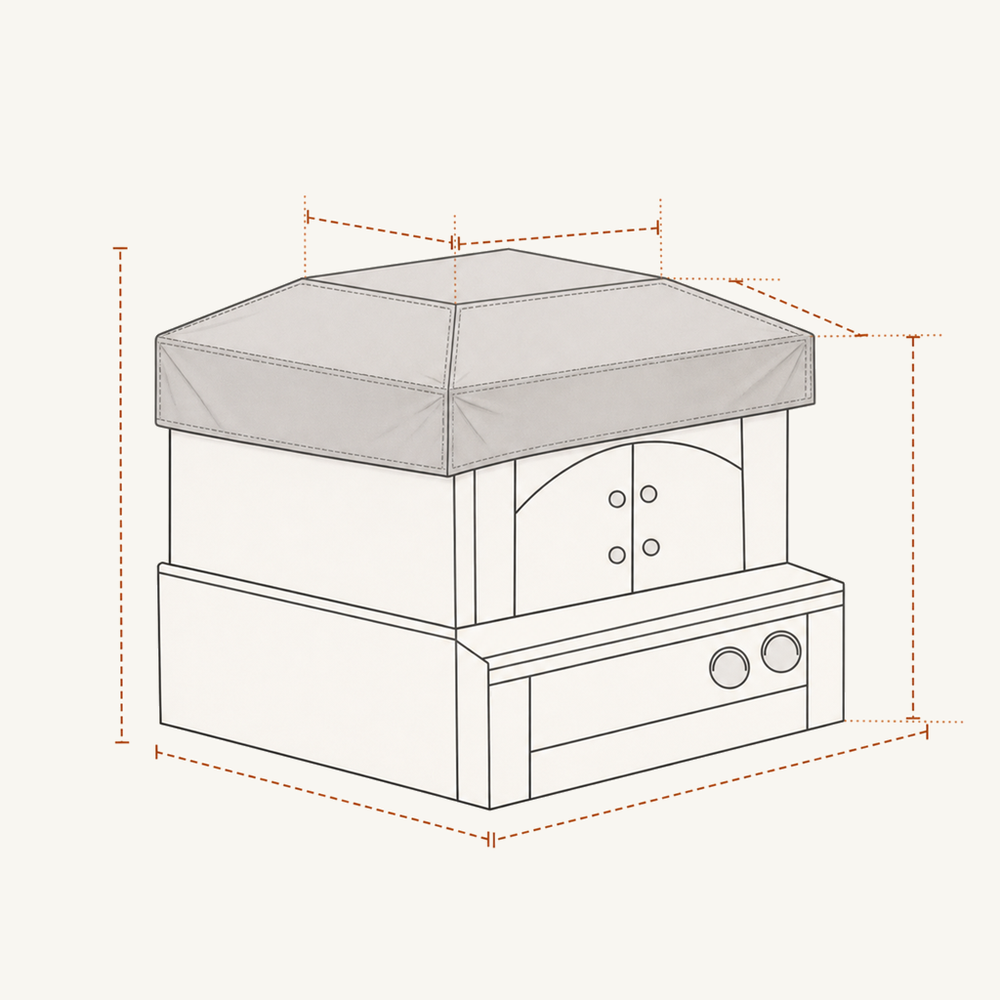
Use the maximum outside dimensions of the podium and every fixed projection:
- Overall width and depth: include side shelves, hooks, handles, and door hardware.
- Front and rear height: record both when the writing surface is sloped.
- Top slope depth: measure from the front edge to the highest rear point.
- Caster footprint: note wheel positions, brake levers, and ground clearance.
- Openings and shelves: mark their location from fixed outside edges.
- Sign or light mount: measure it only if it remains attached under the cover.
Review the dedicated outdoor hostess stand cover page and use the custom measuring guide to prepare annotated photos.
Choose between a drop-over cover and a full zipper opening
A compact stand with clear sides may accept a simple drop-over design. A tall podium parked beneath an awning may not have enough overhead room for that motion. In that case, a long zipper allows staff to wrap the cover around the stand from the front or side.
Place the opening where staff can reach it without stepping into a planter or blocking a walkway. Cover handles can be added to help one person remove and fold the fabric during opening procedures.
Protect shelves and openings without creating water pockets
Protruding menu shelves and ledges can create horizontal valleys in a loose cover. A shaped panel should follow the sloped top and transition cleanly over shelves. If a removable shelf can be folded or stored inside, doing so may create a simpler, better-draining profile.
Doors and cubbies should be closed before covering. If managers need visual access to a lock or asset label, specify a small protected access flap rather than making the entire front excessively loose.
Keep casters accessible and the hem out of standing water
Measure the cover length so the lower edge protects the body without dragging on the deck. Buckle straps can secure the hem around stable lower rails, but they should not interfere with caster brakes. On windy terraces, staff should attach every specified tie-down rather than relying on the weight of the cover.
If the stand is rolled to storage each night, the cover should be removed before moving it unless the design specifically accommodates safe transport and clear wheel visibility.
Select fabric for daily hospitality use
Restaurant covers are handled frequently, so fabric weight, foldability, stain resistance, and cleaning routine matter. Dark neutrals can coordinate with many patios, while a lighter color may reduce heat absorption in strong sun. Compare options on the CoversForge fabric page and consider the stand’s exposure after closing.
Cover the stand only when the surface is dry. Passive vents under weather flaps can help manage humidity inside a deep cabinet-style podium.
Plan logo placement as part of the pattern
A printed restaurant name, location code, or equipment number can make a commercial cover easier to identify. Choose a smooth panel that remains visible when the cover is installed. Keep artwork away from folds, zippers, vents, and high-abrasion corners.
Provide vector artwork or a high-quality file and confirm the desired finished size. For multi-location programs, standardize logo position and allow the asset number to change by site.
Build a repeatable cover program for multiple stands
Restaurants, hotels, venues, and property teams may have several hostess or service podiums. Create an asset list with each stand’s dimensions, configuration, location, color, logo, and fastening method. Group truly identical stands together and keep one approved measurement record for reorders.
Use the CoversForge business inquiries page or commercial sales program when coordinating several assets or branded covers.
Hostess stand cover order checklist
- Confirm the parked, closed, and electronics-free storage configuration.
- Provide front, side, rear, and top photos.
- Record both top heights, full footprint, shelves, handles, and casters.
- Select the zipper side, lifting handles, vents, and tie-down points.
- Specify fabric, color, logo artwork, and equipment identifier.
- Describe wind, rain, sun, cleaning, and daily handling requirements.
A clear specification helps the cover fit the actual restaurant workflow. For an unusual podium or multi-site order, submit the asset sheet through the custom quote form.
Share This Article
