 Business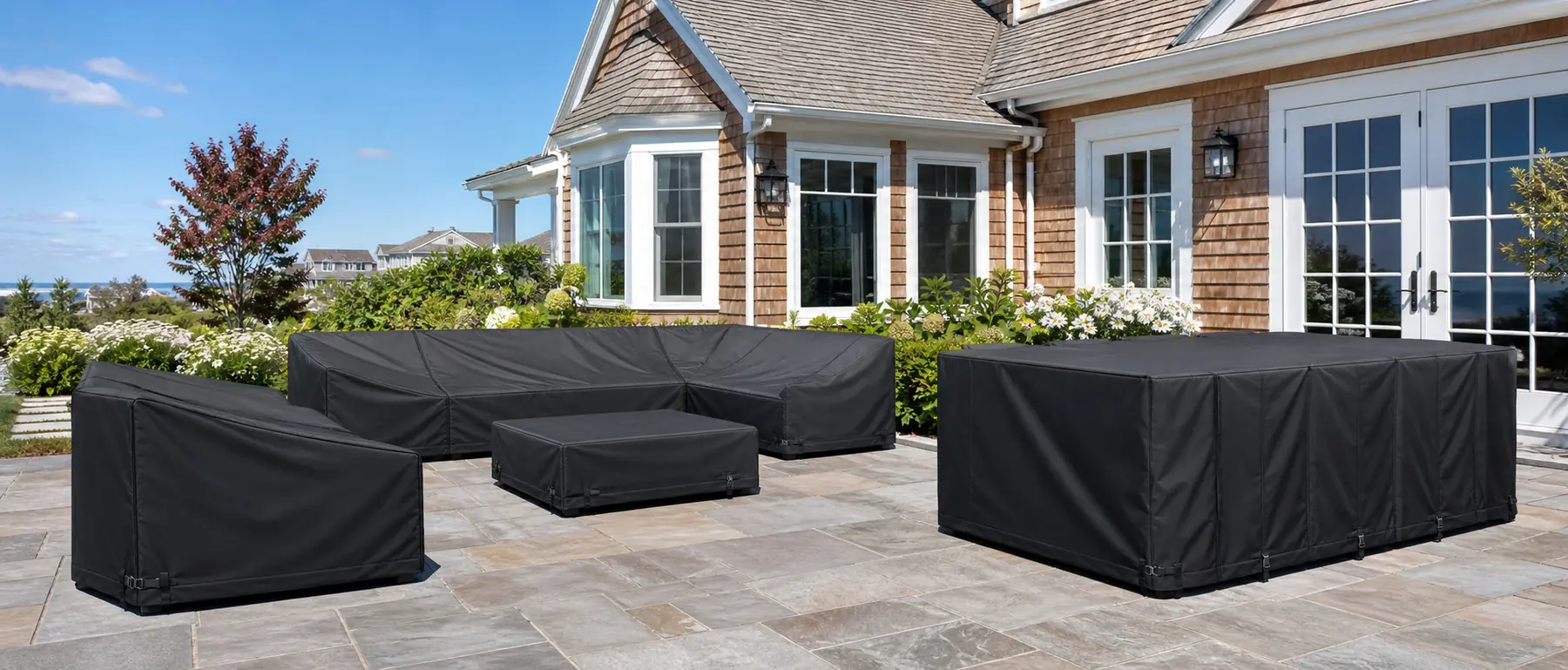





Winter Outdoor Furniture Covers: A Cold-Weather Setup Checklist

Winter outdoor furniture covers must manage more than falling snow. [...]

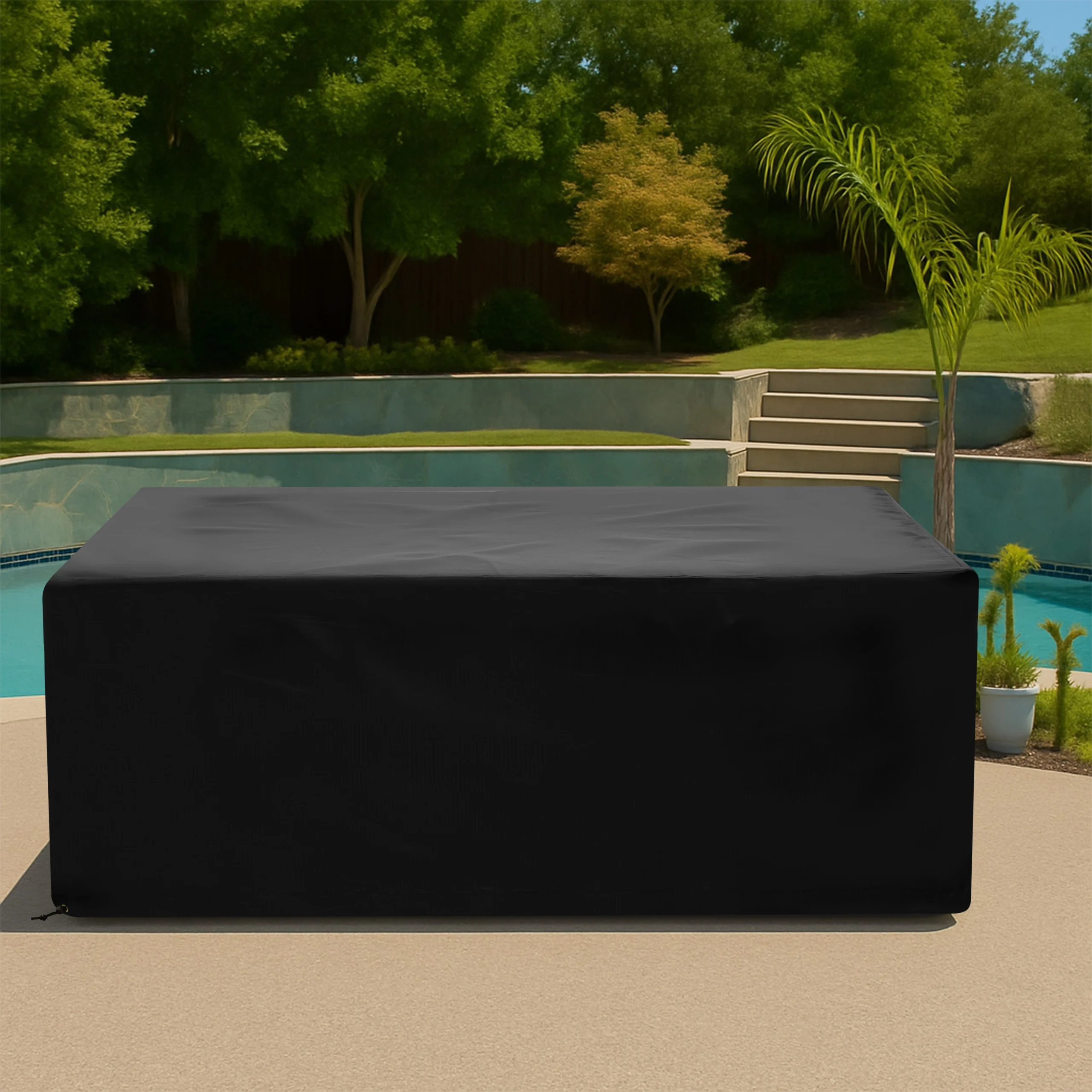
Winter outdoor furniture covers must manage more than falling snow. Freeze-and-thaw cycles, wind, condensation, ice, and long periods without inspection can expose weaknesses that are easy to miss in summer. The most effective winter setup combines a close fit, reliable runoff, secure fastening, and enough airflow to reduce trapped moisture.
This cold-weather checklist helps you prepare sofas, dining sets, chairs, tables, and other patio pieces before the first extended freeze. It also explains when a cover is enough and when removable parts should move into protected storage.
Clean and dry every surface first
Leaves, pollen, food residue, and soil hold moisture against furniture. Clean each piece according to its material, then allow it to dry fully. Pay special attention to woven seats, wood joints, hollow metal frames, hardware recesses, and the underside of tabletops. Covering early can seal in the moisture you are trying to keep out.
Remove cushions when the manufacturer recommends indoor winter storage. If they will remain outside, make sure they are fully dry and that the cover does not press them into a low area where meltwater can pool.
Plan for snow and meltwater runoff
A flat cover surface can hold snow, then collect water when temperatures rise. Create a gentle peak or slope so precipitation moves toward an open edge. Purpose-made support poles can help on dining tables and broad seating areas, but they should have rounded tops that do not concentrate pressure on the fabric.
Do not use sharp improvised objects under the cover. A broom handle or metal corner may puncture material when snow adds weight. After a heavy snowfall, remove accumulation with a soft brush instead of striking frozen fabric.
Secure the lower edge for winter wind
Cold fronts often bring gusts that can lift an oversized cover. Straps, buckles, drawcords, and fitted lower profiles work best when they attach around stable furniture points. Tighten them enough to control movement without pulling seams across corners or compressing the cover against delicate finishes.
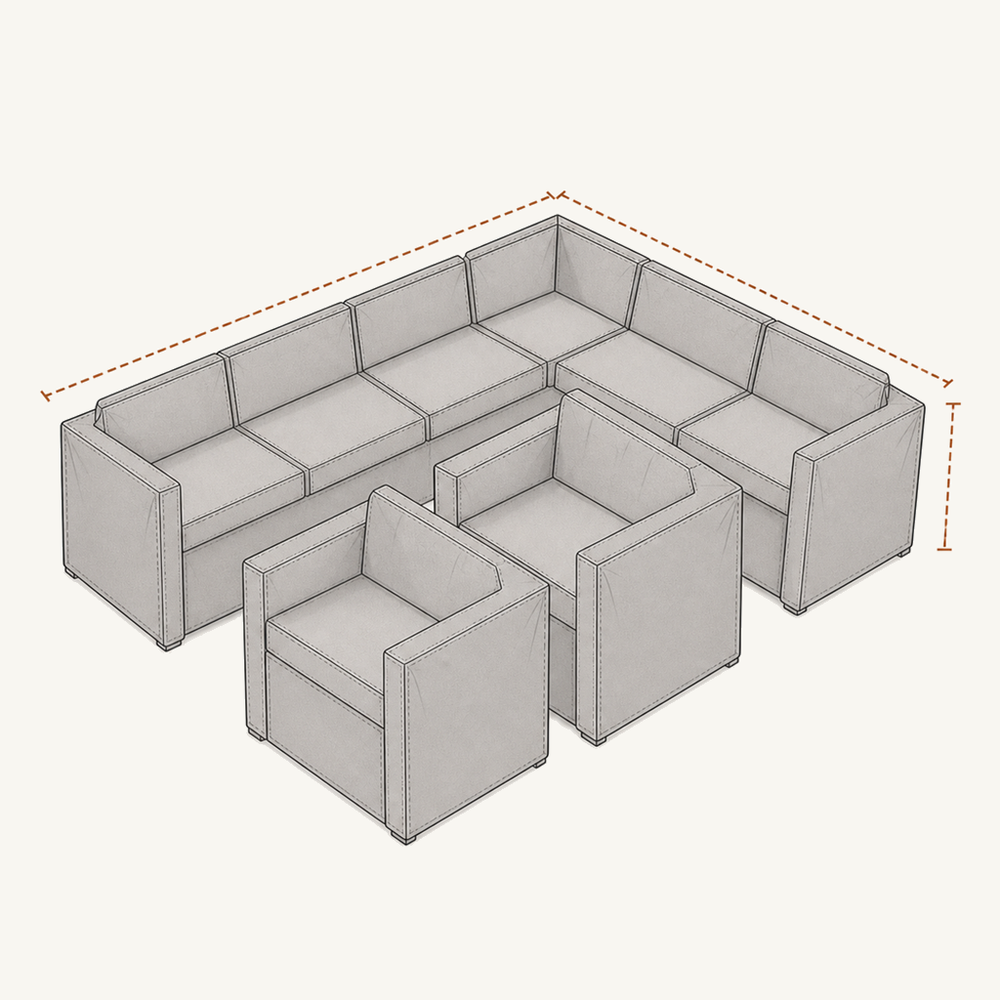
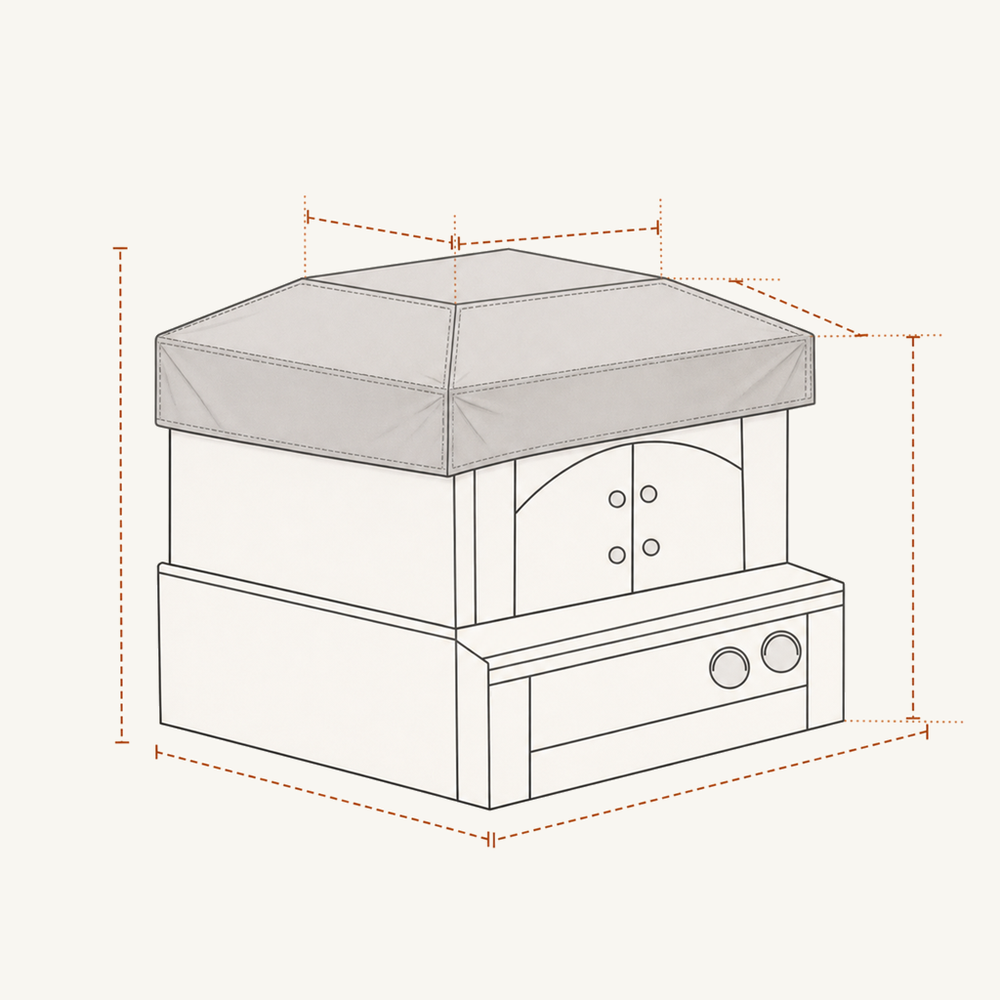
Furniture shape affects strap placement. Record legs, crossbars, arms, high backs, and projecting shelves when you measure. The How to Measure guide provides a practical starting point for custom dimensions.
Keep a small allowance for airflow
A winter cover should not be loose, but it also should not behave like shrink-wrap. Temperature changes can create condensation beneath any cover. Protected vents, a small bottom clearance where appropriate, and a dry installation help humidity escape without opening the furniture to direct weather.
Avoid sealing the lower edge to the ground with plastic. That can trap damp air rising from the patio. If the site is especially humid or shaded, inspect the furniture during a dry winter interval and allow it to air before replacing the cover.
Match the fabric to winter exposure
A covered porch, a mild rainy climate, and an exposed snowy yard do not place the same demands on material. Consider water protection, cold flexibility, abrasion resistance, and the amount of sun the cover receives even in winter. Heavier is not automatically better if the cover becomes difficult to remove or cannot follow the furniture shape.
Compare available constructions on the CoversForge fabric page. A useful choice balances protection with handling, especially if you plan to use the furniture on occasional mild days.
Protect different furniture materials correctly
- Wood: start clean and dry, maintain the finish, and avoid prolonged contact with wet debris.
- Steel: touch up damaged coatings and inspect joints or fasteners where corrosion can start.
- Aluminum: secure the cover carefully because lightweight pieces can shift in wind.
- Wicker and woven resin: remove trapped leaves and prevent ice from loading unsupported spans.
- Stone or glass tops: follow the furniture maker’s cold-weather guidance and do not create concentrated support pressure.
Inspect after major weather changes
Check covers after high wind, heavy snow, and a rapid thaw. Confirm that straps remain attached, water is draining, and fabric has not rubbed against a sharp corner. Clear accumulated debris before it freezes into place. A five-minute inspection can prevent a small shift from becoming a season-long exposure point.
Prepare a repeatable spring removal plan
Remove covers on a dry day, clean them according to the care instructions, and let both sides dry before storage. Never fold a damp cover tightly for the warm season. Inspect seams and fastening hardware so repairs can be handled before the next winter.
For a cover shaped around your exact sofa, dining set, or mixed patio arrangement, browse custom patio furniture covers. Unusual footprints can be submitted through Request a Quote with measurements and photos.
Share This Article


