 Business





Custom Clear Vinyl Covers: When Visibility Matters as Much as Weather Protection

Most outdoor covers are designed to hide what they protect. [...]
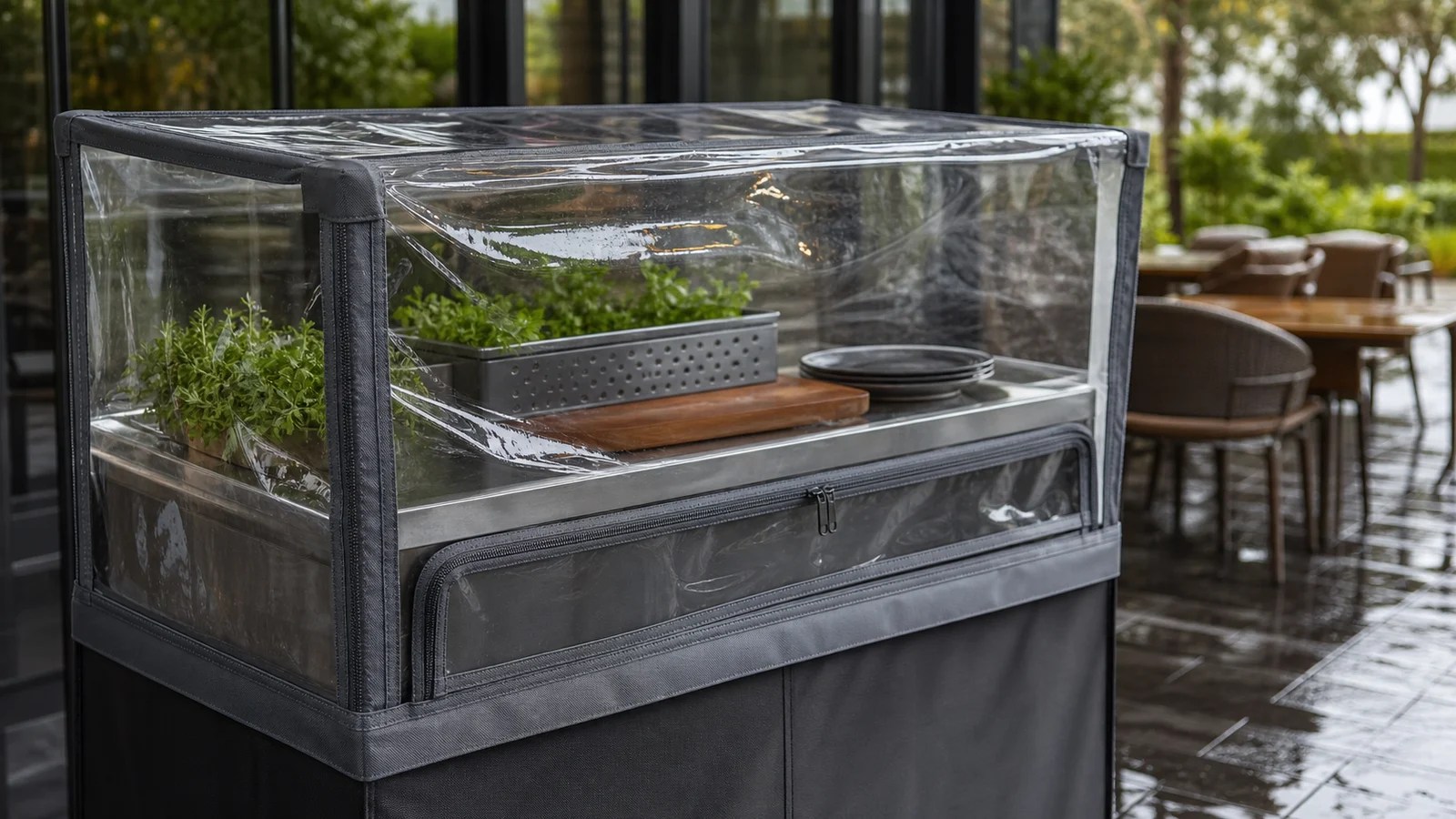
Most outdoor covers are designed to hide what they protect. That works for storage, but it is not always ideal. Some patios, counters, display carts, restaurant stations, and equipment areas need weather protection without losing visibility. Custom clear vinyl covers solve that problem by combining see-through panels with made-to-measure construction.
A clear vinyl cover can protect against dust, light rain, wind-blown debris, fingerprints, and daily exposure while keeping the covered item easy to identify. That makes it useful for both residential and commercial spaces where the object underneath still needs to be seen, checked, or presented neatly.
When clear vinyl makes sense
Clear vinyl is most useful when visibility is part of the function. A cafe may want to cover an outdoor service cart while still showing clean surfaces underneath. A homeowner may want to protect a patio prep table without making the space look closed off. A business may need to cover display fixtures, sample storage, or seasonal equipment while keeping labels and contents visible.
- Outdoor counters and carts: Clear panels help staff see surfaces and stored items without removing the entire cover.
- Display areas: Products, samples, and fixtures stay visible while being shielded from dust and splashes.
- Patio storage: Clear sections make it easier to identify cushions, tools, or accessories.
- Specialty equipment: Operators can inspect controls, labels, and gauges at a glance when the cover is designed correctly.
Visibility is the reason to choose clear vinyl, but fit is the reason it works well. A loose clear cover can wrinkle, trap water, and look messy. A custom pattern helps panels sit cleaner and makes access points easier to use.
Clear does not mean one-material-only
A good clear vinyl cover often uses more than one material. The transparent panel may be paired with fabric borders, reinforced corners, stitched binding, zippers, hook-and-loop closures, or straps. The opaque fabric can add strength where the cover needs structure, while clear panels provide visibility where it matters.
This mixed construction is especially helpful for irregular shapes. For example, a display cart may need a clear front panel, fabric top reinforcement, and side openings for handles. A patio appliance station may need a clear panel over controls but stronger fabric around sharp corners or lower edges.
Access points should be planned early
Before ordering a custom clear vinyl cover, decide how often the covered item needs to be opened or used. If the cover must come off every day, a simple lift-off design may be enough. If the item needs partial access, a zipper, flap, or roll-up section may be more convenient.
Access choices should follow real usage. A zipper placed in the wrong spot can be harder to reach than removing the cover entirely. A flap that opens into a wall or railing may not help. Photos of the space are useful because they show where hands can reach, where doors swing, and where the cover may need clearance.
Condensation and airflow matter
Clear vinyl is less breathable than many outdoor fabrics. That can be useful for blocking splashes and dust, but it also means trapped moisture should be considered. In humid climates or damp shaded areas, condensation can form inside a tightly sealed cover.
The solution is not always to add more openings. It is to place openings thoughtfully. Small vents, fabric sections, or controlled gaps may help reduce trapped moisture while still keeping the item protected. The right approach depends on whether the cover is used for short-term daily protection, overnight coverage, or longer storage.
How to measure for a clear vinyl cover
Accurate measurements are especially important with clear vinyl because wrinkles and tension are more visible than on opaque fabric. Measure the full width, depth, and height. Include handles, raised edges, wheels, rails, shelves, knobs, and any hardware that should remain under the cover.
- Measure the widest points: Do not measure only the main box if handles or side rails extend farther.
- Note panel locations: Decide which areas should be clear and which can be reinforced fabric.
- Photograph the object: Front, back, side, top, and detail photos help clarify shape.
- Describe access needs: Mention zippers, flaps, openings, and how often the item is used.
The How to Measure guide can help organize dimensions before submitting a custom request.
Cleaning and handling tips
Clear vinyl should be handled with care because scratches are easier to see than on woven fabric. Rinse off grit before wiping. Use a soft cloth rather than rough pads. Avoid folding the same crease sharply again and again, especially in cold weather when vinyl may feel stiffer.
For commercial settings, it helps to assign a simple cleaning routine. Staff should know where the cover is stored, how it fastens, and which cleaning products are safe. A cover that is easy to handle is more likely to be used correctly every day.
When clear vinyl may not be the best choice
Clear vinyl is not always the right material for every outdoor cover. If the covered item does not need visibility, a standard outdoor fabric may offer a cleaner appearance and easier long-term handling. If the cover will sit in extreme sun all day, discuss material choices carefully because clear materials can show scratches, heat stress, and aging differently than opaque textiles.
In many projects, the best design uses clear vinyl only where visibility is needed and stronger outdoor fabric elsewhere. That keeps the cover practical, structured, and easier to maintain.
Design the cover around the real use case
Custom clear vinyl covers work best when they are designed around the object, the space, and the daily workflow. A homeowner protecting a patio cart has different needs than a restaurant covering an outdoor station after closing. A retail display has different visibility requirements than a storage rack.
To plan a clear cover, send measurements, photos, and notes about access, visibility, and weather exposure through Request a Quote. You can also browse custom cover categories to see how made-to-measure construction can be adapted for unusual shapes, display needs, and outdoor protection.
Share This Article

Written by : CoversForge
Follow Us
Latest Articles
September 9, 2026
September 9, 2026