 Business





How to Store Patio Cushions Outside Without Trapping Moisture

Learning how to store patio cushions outside is less about [...]

Learning how to store patio cushions outside is less about hiding them from rain and more about controlling moisture. A sealed box can keep a shower off the fabric, but it can also trap damp air around foam and seams. A loose furniture cover can block debris while still allowing wind-driven rain to reach the cushions. The best setup keeps cushions dry before storage, separates them from wet surfaces, and gives residual humidity somewhere to go.
This guide explains a practical outdoor storage routine for seat pads, back cushions, pillows, and deep-seating inserts. It is designed for homeowners who use their patio frequently and want a system that is quick enough to follow after an ordinary evening—not only before a major storm.
Start with completely dry cushions
Never put damp cushions directly into a storage box or under a fitted cover. Water can remain inside piping, zipper folds, tufting, and foam even when the face fabric feels dry. Stand each cushion on an edge in a breezy, shaded place and allow air to reach both sides. If the cushion was soaked, unzip removable covers when the care instructions allow it and let the inner foam dry separately.
A simple hand test is not always enough. Press firmly near the center and along the lower seam. If the fabric cools noticeably or moisture appears under pressure, keep drying. Storing one damp cushion beside four dry ones can raise humidity throughout the entire box.
Choose storage that sheds water
An outdoor deck box should have a lid that directs water away from the opening, overlapping edges, and a base that sits above routine runoff. Place it on a level, well-drained surface instead of directly under a roof valley or sprinkler. If the patio floods during heavy rain, use riser feet or a platform so the bottom does not sit in standing water.
Water resistance and ventilation need to work together. Small protected vents can help equalize humidity, but large gaps exposed to wind can admit rain. Check the box after the first storm from each direction. The right position on the patio often matters as much as the storage product itself.
Create airflow inside the box
Do not compress cushions into every available inch. Leave a narrow air channel along one side and avoid pressing fabric against a wall that may collect condensation. A clean slatted insert or breathable spacer at the bottom can keep the lowest cushion away from incidental moisture.
- Stack cushions loosely, with heavier seat pads at the bottom.
- Turn alternating cushions so piping does not create a sealed edge.
- Use breathable fabric bags for dust control rather than airtight plastic.
- Keep garden chemicals, damp tools, and pool accessories in a different box.
Decide what should stay on the furniture
Quick-dry cushions may stay on furniture during short periods of fair weather, but permanent outdoor exposure still accelerates fading, soil buildup, and seam wear. If cushions remain in place overnight, a properly fitted furniture cover should create runoff rather than rest directly on soft cushions and form low pockets.
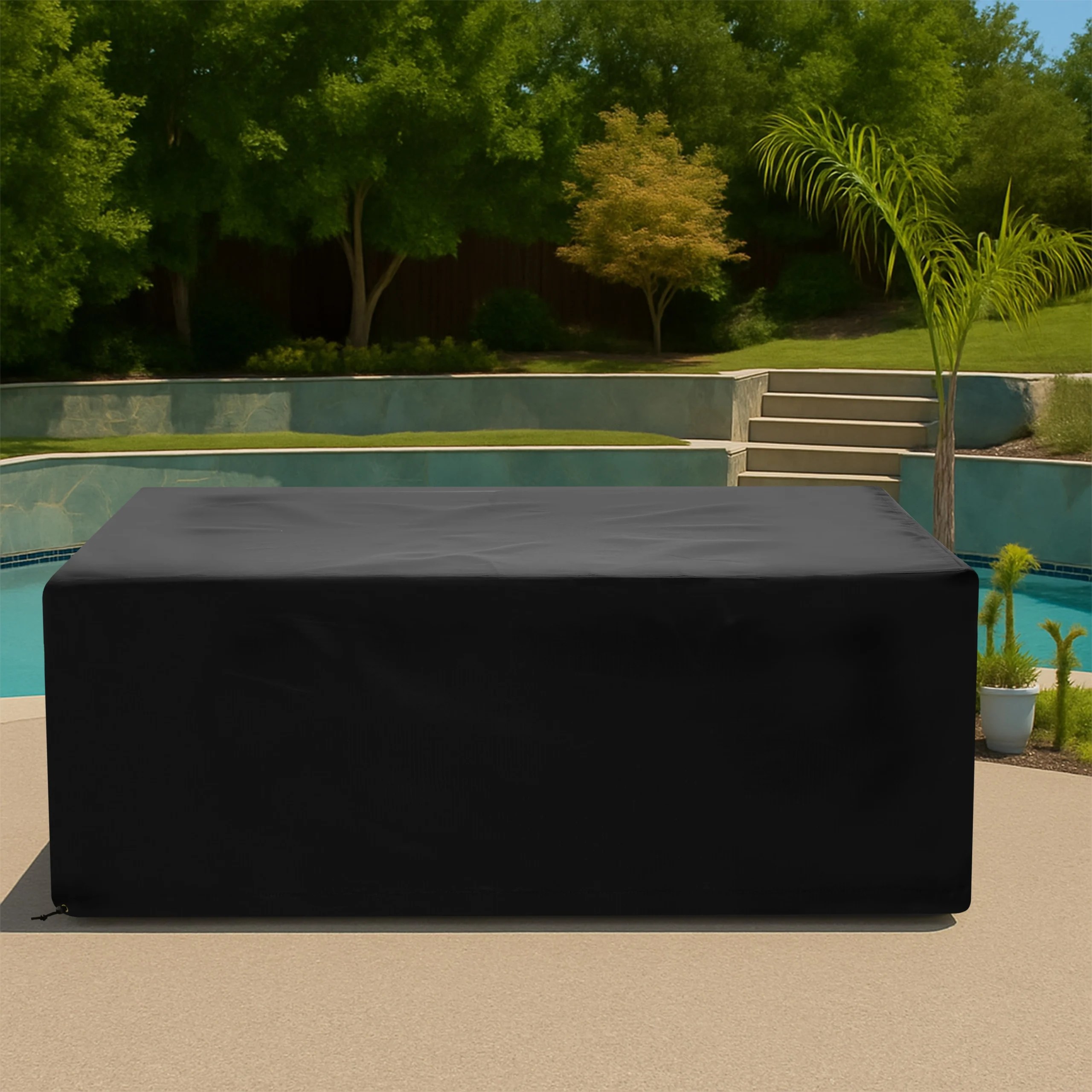
For sofas and sectionals, check the shape and fastening points before ordering a cover. The CoversForge How to Measure guide helps you record the overall footprint, back height, arm profile, and any chaise or corner sections. A made-to-fit shape is easier to secure than excess fabric that can sag onto the cushions.
Use covers for daily protection, storage for severe weather
A cover and a deck box solve different problems. A fitted cover is convenient between uses and can shield the complete furniture frame from dust, rain, and sun. Enclosed storage gives removable cushions extra protection during long wet periods, winter weather, or weeks when the patio will not be used.
In humid climates, combine the two methods: store dry cushions in a ventilated box and protect the empty furniture frame with a cover. Explore custom patio furniture covers for sofas, dining sets, chairs, and unusual configurations.
Avoid common outdoor cushion storage mistakes
- Airtight plastic around damp foam: it prevents drying and concentrates moisture.
- Storage against soil or grass: ground moisture can reach the underside of a box.
- Overfilling: the lid may distort, seals may not close, and air cannot circulate.
- Ignoring pests: food crumbs and open gaps can attract insects or rodents.
- Covering immediately after cleaning: detergent and rinse water can remain deep in the cushion.
Build a two-minute end-of-day routine
Brush away crumbs, check for damp spots, and stand cushions briefly while you wipe the furniture. Move dry cushions into the box with space around them, close the lid fully, and secure the furniture cover before wind increases. After a heavy storm, open the box on the next dry day for a quick inspection.
If your furniture has deep cushions, curved backs, or a sectional footprint that standard covers do not follow, use Request a Quote to share dimensions and photos. CoversForge can plan the fit, fastening, and fabric around the way you actually store and use the patio.
Share This Article

Written by : CoversForge
Follow Us
Latest Articles
September 9, 2026
September 9, 2026