 Business





Custom RV Covers: What to Protect Before Long-Term Outdoor Storage

RVs and travel trailers are built for travel, but they [...]

RVs and travel trailers are built for travel, but they often spend more time parked than moving. During storage, the roof, seams, windows, vents, tires, and exterior trim face sun, rain, dust, leaves, and seasonal temperature changes. Custom RV covers help reduce that exposure by matching the height, length, and details of the vehicle more closely than a loose universal cover.
The goal is not simply to cover a large object. The goal is to protect the areas most likely to age while the RV is sitting still. A good cover should stay secure, allow practical access where needed, and avoid the sagging or flapping that can damage fabric and rub against exterior surfaces.
Why RV storage is hard on exterior surfaces
When an RV is parked outside, the same surfaces face the weather every day. UV exposure can dry and fade exterior materials. Rain can sit around roof fixtures, seals, and seams. Leaves and dirt can collect in edges. Wind can push debris against the sidewalls. Even when the RV is not in use, the exterior is still working.
A properly fitted cover adds a protective layer between the RV and the environment. This is especially useful when the vehicle is stored in a driveway, open lot, campground storage area, or seasonal property without full shelter.
Areas a custom RV cover should account for
Every RV has a different profile. Before choosing a cover, identify the features that affect the shape.
- Roofline: Air conditioners, vents, antennas, solar panels, and roof racks can change the top profile.
- Front and rear shape: Rounded fronts, rear ladders, spare tires, and mounted accessories may need extra allowance.
- Windows and doors: If you need access during storage, plan for zipper panels or separate access zones.
- Tongue and hitch area: Travel trailers may need coverage around the front box, propane cover, or hitch assembly.
- Strap paths: Tie-down points should secure the cover without pulling against fragile trim.
How to measure for an RV cover
Measure the length, width, and height of the area to be covered. For travel trailers, be clear whether the measurement includes the hitch, rear bumper, spare tire, ladder, or roof accessories. For motorhomes, note mirrors, awnings, roof equipment, and rear-mounted items.
Photos are especially helpful for RV covers. A side photo shows length and roofline. Front and rear photos show rounded or angled profiles. Detail photos show vents, ladders, awnings, or mounted storage. These details help prevent a cover from being too tight in one area and too loose in another.
If you need a measurement checklist, the CoversForge measuring guide gives a practical framework for made-to-measure covers.
Fit, straps, and wind control
Because RV covers are large, wind control matters. A loose cover can flap, shift, and place stress on seams. A custom cover should use the correct dimensions, reinforced stress points, and well-placed straps to keep the fabric stable.
Straps should help hold the cover in position without crushing exterior trim or pulling fabric across sharp edges. Reinforced corners are useful around roof transitions, front curves, ladders, and areas where tension naturally collects.
Do RV covers need vents?
Ventilation can help reduce trapped moisture, especially during seasonal storage or changing temperatures. The cover should protect from rain while avoiding a sealed environment where condensation has nowhere to go. This is why breathable fabric choices and vent placement matter.
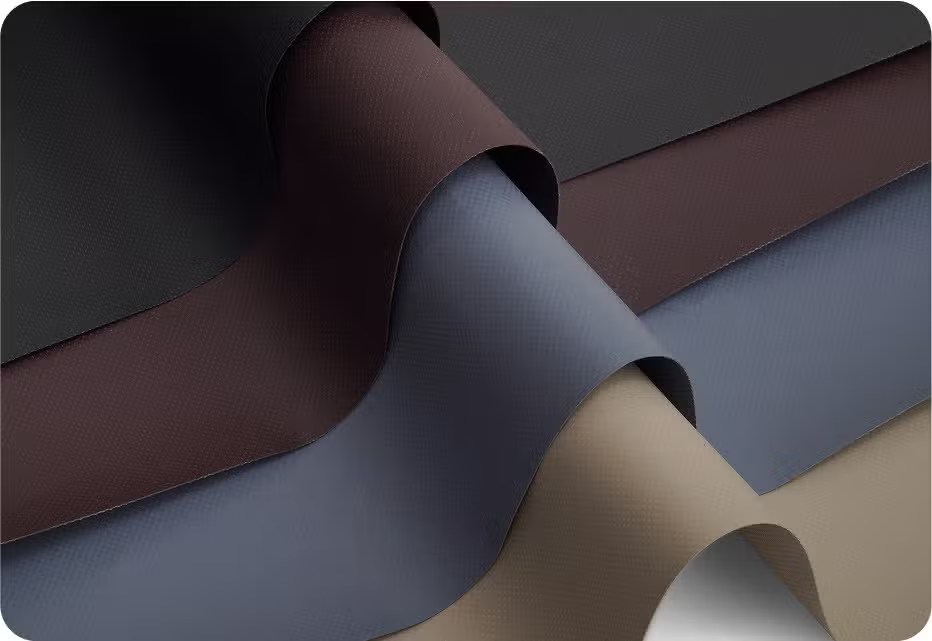
Vent needs depend on climate, storage duration, and how the RV is parked. A cover used for short dry-season storage may have different priorities than one used through winter rain or humid summer heat. You can compare material choices on the fabric options page.
Universal RV cover vs custom RV cover
Universal covers are usually chosen by size range. They can be useful for standard shapes, temporary use, or budget-friendly storage. But RVs often have roof accessories, ladders, spare tire mounts, awnings, and curved profiles that do not match a simple box.
A custom cover is a better fit when you want cleaner tension, fewer loose fabric areas, and a cover that accounts for the actual vehicle. This is especially important if the RV will remain outside for months at a time.
Storage checklist before covering your RV
- Clean the roof and exterior so dirt is not trapped under the cover.
- Dry the surface before covering whenever possible.
- Check sharp edges, loose trim, or exposed hardware that could rub against fabric.
- Confirm vents and roof accessories are measured and photographed.
- Secure straps evenly after installation and recheck them after strong wind.
When to request a made-to-measure RV cover
Consider a custom cover if your RV has unusual dimensions, roof equipment, exposed accessories, or long outdoor storage periods. A made-to-measure cover can be designed around the shape instead of forcing extra fabric to gather around corners.
To plan an RV or trailer cover, visit the RV and trailer covers category or use Request a Quote. Include overall dimensions, storage conditions, photos, and any access needs you want built into the cover.
Share This Article

Written by : CoversForge
Follow Us
Latest Articles
September 9, 2026
September 9, 2026